


Big Sky (Kongakut) BackpackingHigh Arctic Backpacking in the Arctic National Wildlife Refuge• Dates: We are not currently offering this trip but can arrange a similar custom trip for your group. Please contact us for details, or join us for the similar Sostice Backpack in June or Noatak Backpack in August. • Region: Arctic National Wildlife Refuge, Northern edge of the boreal forest over the divide to the Kongakut River, which flows into the Arctic Ocean. |
||
|---|---|---|
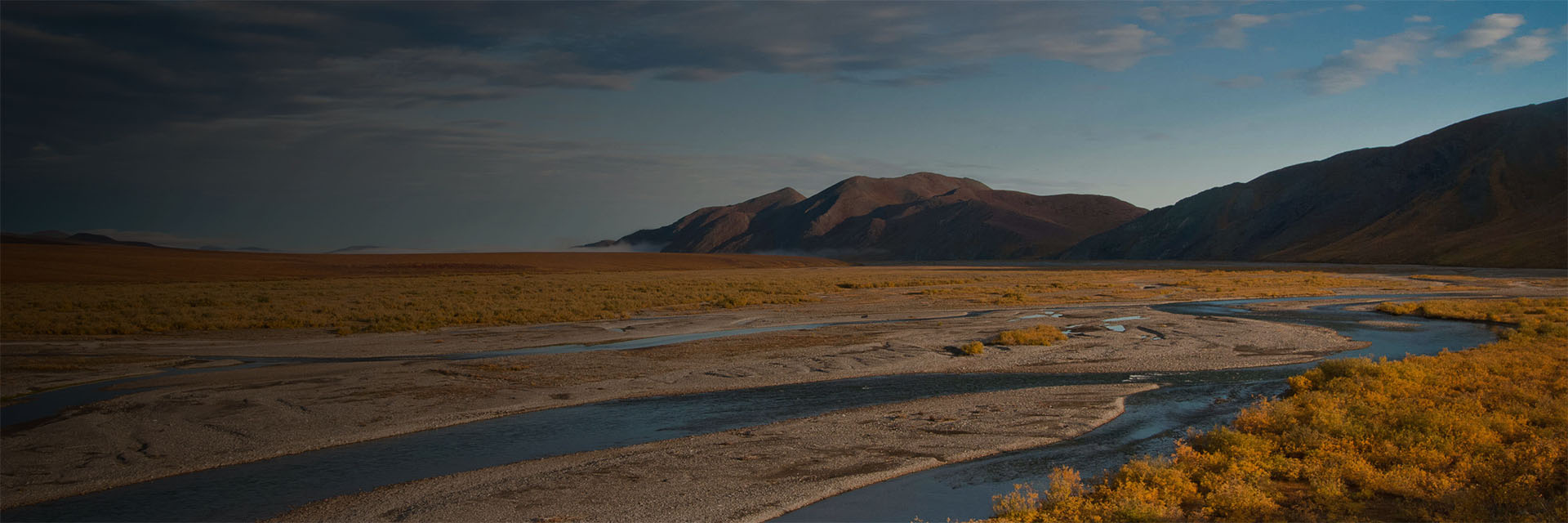
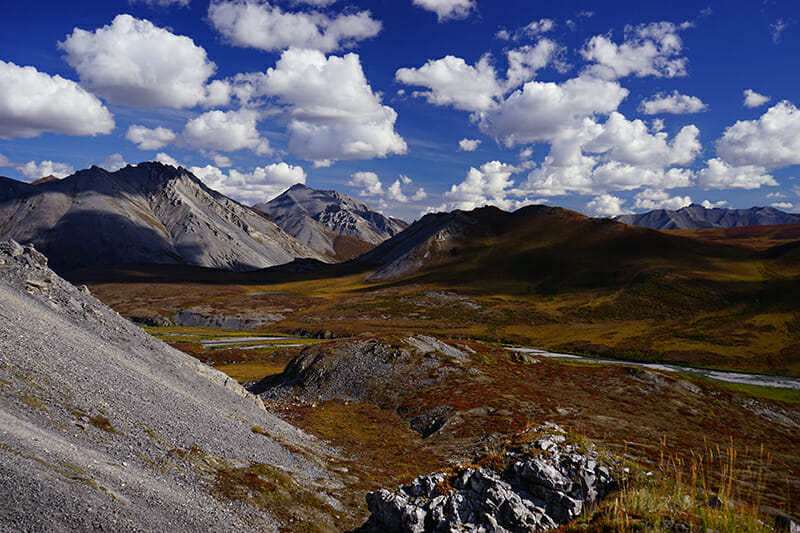
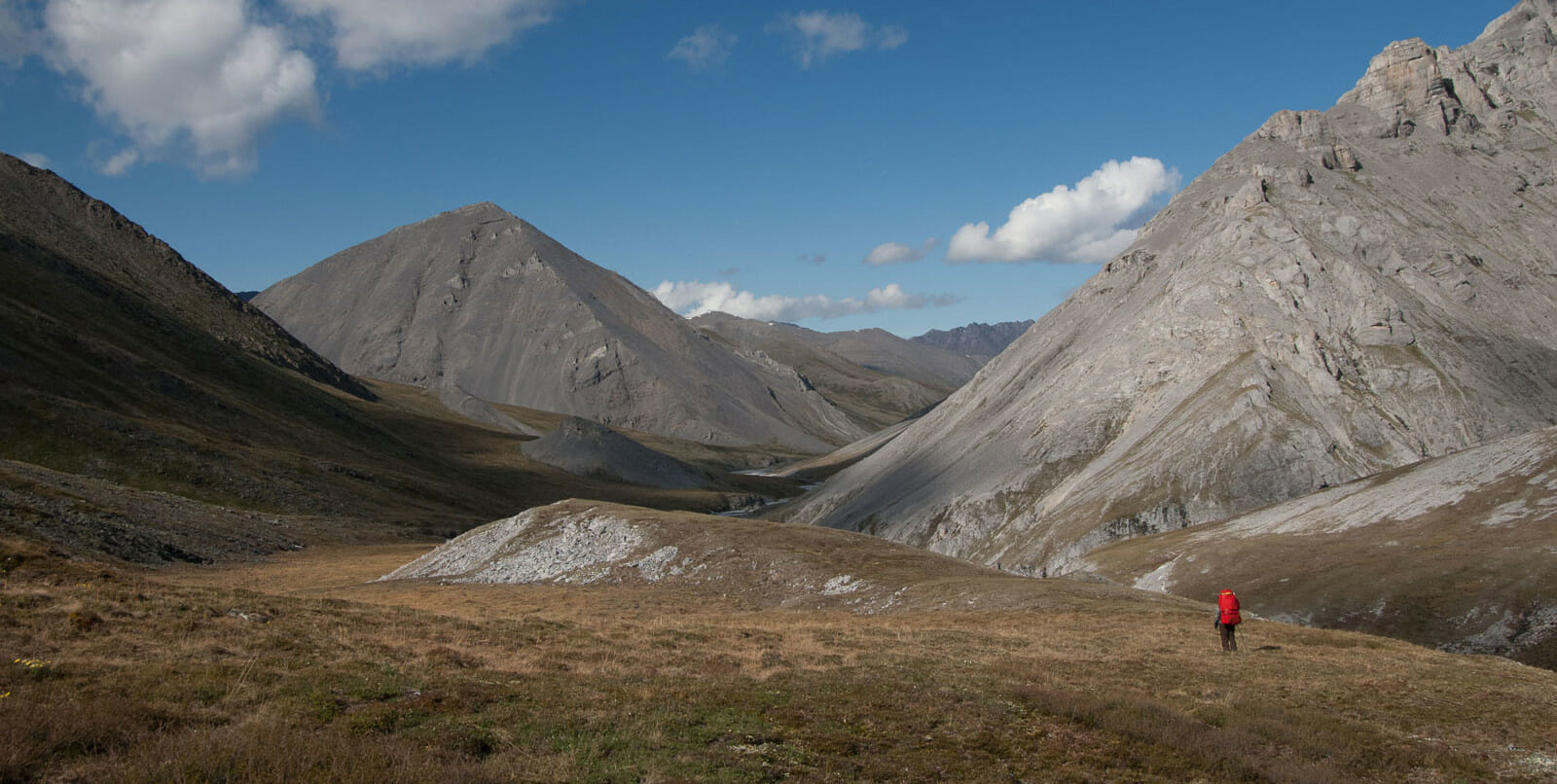
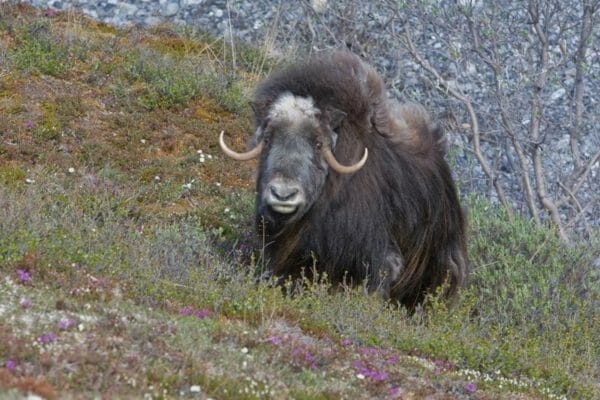
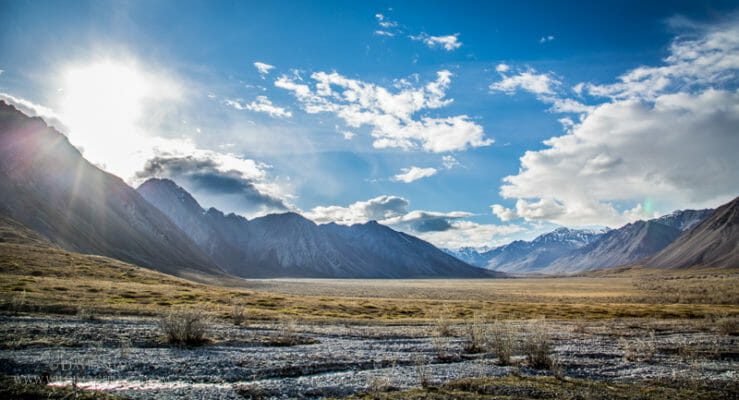
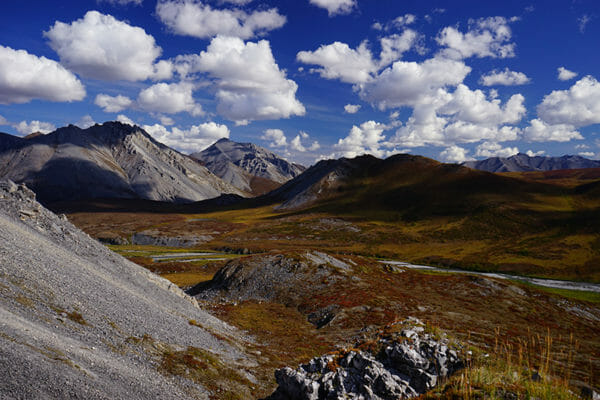
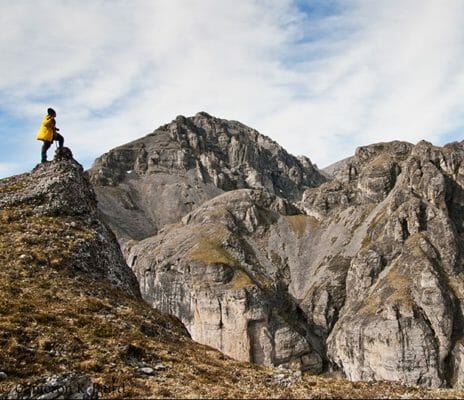
Sketch of the Big Sky Backpacking trip…This year’s selection for the perfect autumn backpack takes us to the Arctic National Wildlife Refuge, where the scenery is breathtaking and the walking is easy (at least by Brooks Range standards). We’ll start on the south side of the Continental Divide in the Colleen River watershed at about 3,000’ elevation. Big skies, solid footing and arctic wildlife are scattered across the Divide and down into the Kongakut River watershed on the other side. It is a region of steep limestone mountains, immense gravely basins, and clear water creeks, more than 50 miles from anything even resembling a road, trail or town. Our route sticks to the large basins and canyons of the upper Colleen and Kongakut Rivers but higher peaks ranging to 7,000 feet are within reach for side trips on layover days when we can explore without our packs. Fall colors will deepen throughout the trip and blueberries should be ripe. The daylight is still long, but we’ll have enough darkness night day to possibly see the Aurora Borealis. We have good chances of seeing grizzly bears, wolves, some bull caribou, golden eagles, Dall sheep, and foxes. There is also a population of moose which winter in this area and they may be arriving in droves; their enormous brown bodies in striking contrast to the wide open tundra.
We’ll travel just over 30 miles in eight days. The route is an easy one in terms of elevation gain and the terrain covered, but there will be some long days and we’ll need to cross creeks from time to time. Starting on the south side of the Brooks Range, we’ll find ourselves initially at the northern edge of the tree line. The walking is pretty good, but we get into some sedge tussocks (wobbly, wet walking) and we have some limestone canyons to negotiate. In return for the hard work of Alaska backpacking, we enjoy rugged colorful peaks, soft green valleys, picturesque cottonwood glades, and (if lucky) abundant wildlife.
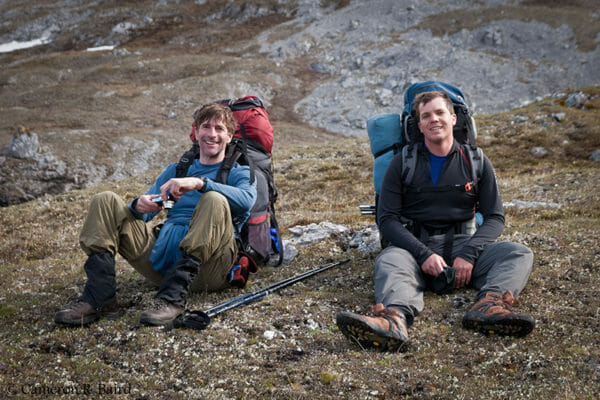
Hiking in the arctic is an “off-trail” experience, so a six-mile day can take as long and be as taxing as ten miles in other parts of the world. Experience backpacking is recommended for this trip, but novices in good shape, who are willing to do some training, would enjoy the trip too. Each hiker will carry 15-20 pounds of food and community gear; due to the small party size and the trip’s duration, expect to start the trip with a pack weighing no less than 45 pounds. |
![]() |
|
![]() |
||
![]() |
||
Kongakut Backpack ItineraryWhat follows is a general flow of events. Expect the unexpected and prepare to be flexible.
Aug 15: Meet your guide at 4pm for a pre-trip meeting in Fairbanks.
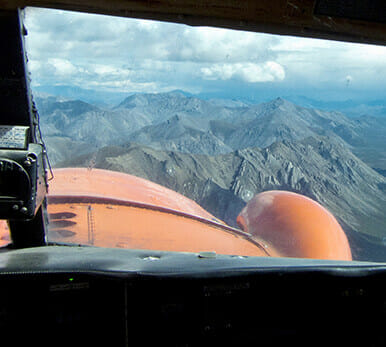
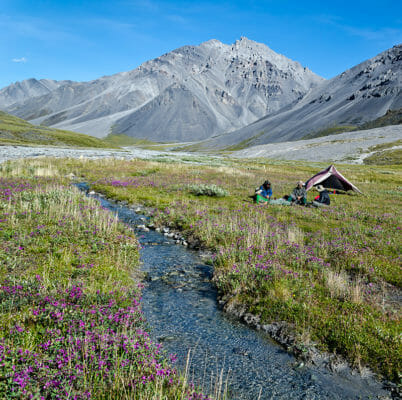
Aug 16: Fly 350 miles north from Fairbanks, across the Yukon River and the Arctic Circle to the Gwich’in Athabascan village of Arctic Village, which sits alongside the Chandalar Rive r. From Arctic Village, we board a smaller plane and fly northeast to the headwaters of the Colleen. Once the pilot leaves, we’re on our own. We’ll hike several miles to the first of many lovely camps. You’ll have the evening to settle into your surroundings, hike up a ridge or just gape at the awe-inspiring scenery.
Aug 17- 22: After the first day we will be north of tree line and the pass is devoid even of brush. Dall Sheep can be seen on the craggy peaks, bears and wolves use this pass to move from one valley to the next. We will spend 5 or 6 hours a day carrying packs, looking for animals and watching the mountains slowly pass by. After hiking each day and enjoying a hot meal there will be daylight enough for a leisurely stroll to look around. There will be time for a layover day to explore side canyons sculpted by millions of years of snowmelt, or climb one of the many ridges for a long view of the Brooks Range. Fall colors should be brilliant, evidence of another season coming to an end with a flourish of rich color and autumnal scents before the hard season of snow and darkness sets in.
August 23: Hike a short distance to meet our plane at a gravel airstrip on the banks of the Kongakut River. Fly back to Fairbanks or join the Fall Kongakut rafting trip and paddle towards the sea.
|
![]() |
|
![]() |
||
Big Sky- Kongakut Backpack DetailsIncluded in the price of the trip: Transportation beyond Fairbanks, food while in the wilderness, stoves, cooking & eating utensils, water filter, safety & repair gear and professional guide service.
Not included in the price of the trip: Lodging, non-camp meals, personal clothing and gear, backpack, tent, fishing gear, and fishing license. Gratuity for guide(s). An equipment list is provided upon registration. Rental equipment is available through Arctic Wild.
Weather and Bugs: Weather this time of year is often cool and stormy, though we can get some awesome clear weather. Precipitation is generally light, and it’s fairly easy to keep comfortably dry. Because it’s the arctic, however, snow is always possible and you can expect temperatures to range from the 30s to the 60s. Because of the cool weather, mosquitoes should be absent.
Suggested Reading: Arctic National Wildlife Refuge, Alaska Geographic; Being Caribou, Karsten Heuer; Arctic Dreams, Barry Lopez; Caribou & the Barren-Lands George Calef; Arctic Wild, Lois Crissler. More Alaska reading is available from our Bookstore. |
||