Arctic Sand Dunes- Kobuk Valley National Park

The inspiration for these daily photo posts comes from my good friend Laurent Dick in Juneau and his blog “Alaska 365“. He hopes to guide some of our photography- base camp trips next summer, adding another excellent photographer to our ranks.

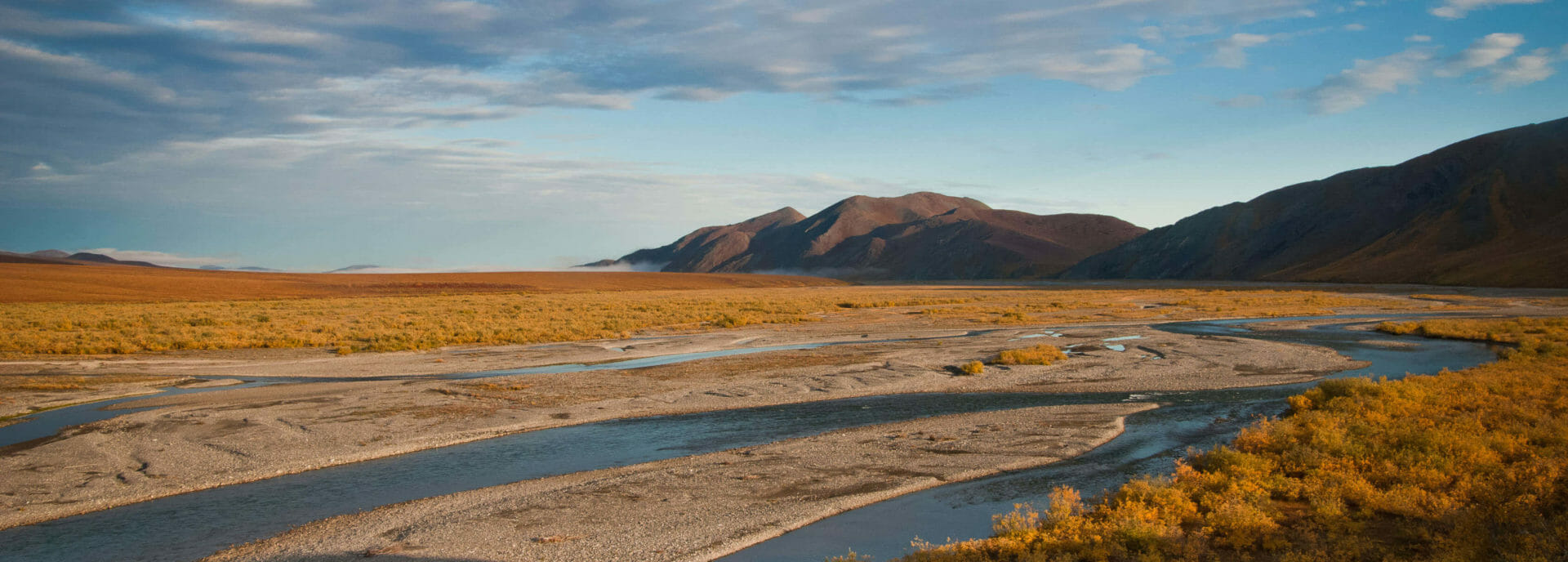
Today’s photograph was taken by Moe Witschard while guiding a custom trip to the Great Kobuk Sand Dunes in Kobuk Valley National Park. Moe and his adventurous client, spend 10 days canoeing the Noatak River, then ended the trip with 4 days hiking and photographing the dunes.

Kobuk Sand Dunes- Moe Witschard You can see more of Moe’s photography at www.moephotography.com

Alaska Photography

Arctic Wild guides...are an exceptional group of people. Not only do they have outstanding wilderness and people skills, but many of them are accomplished photographers too. Over the years, they have given us some beautiful images. We have outstanding photographs of everything from caribou swimming the Kongakut to Bears Katmai National Park.

With 5 feet of snow on the ground and a generous helping of darkness, I have had had time to sort this collection, and for the next week or so, I plan on sharing an image a day from my files. I hope you enjoy this sampling of wildlife and landscape photography from our guides.
Harlequin in Katmai- Dave Shaw

I love this picture of a little Harlequin Duck that Dave Shaw took on our Katmai Canoe trip this August. See more of his work at wildimagephoto.com

Last Chance for the Arctic Refuge

Today is the last day that the Arctic National Wildlife Refuge will be accepting comments on their comprehensive plan. Even if you have never been to the arctic, we would encourage you to email the refuge staff in support of additional wilderness. Our comments urged the refuge to designate the famed coastal plain as wilderness. We are also voicing our support for Wild and Scenic designation for rivers like the Canning, and Hulahula. If you haven’t already submitted comments, today is the day! November 15th is the last day they will be accepted. Feel free to contact us if you want more information.

Arctic Immersion

Camping in ANWRMany of our clients sign-up for combination trips each summer. Usually they join one of our backpacking trips and segue into a canoe or rafting adventure so they can spend some more time in the arctic and cover some more ground. This June one intrepid traveler went whole hog and combined three trips for a 25 day odyssey and full immersion in the arctic wilderness. 24 nights without a sunset, 24 mornings with birdsong for an alarm clock, 25 days to experience the mystery and magic of the far north. Here is what he had to say about his summer at high latitude:

“In June of 2011 I took three Arctic Wild trips back-to-back-to-back to ensure that I could absorb the intensity and uniqueness of the Arctic. Arctic Wild did a brilliant job of managing my transitions — from a Western Arctic caribou base camp, to the lower Kongakut raft trip, and ending with the Arctic coast canoeing. The three trips were incredibly different, each with its special charms and challenges. On each I could take time to pace myself for the 25 day immersion. The experience was extraordinary and it gave me insights into the full range of the wildlife and Arctic environment, and the awesome power and beauty of the Arctic. I’m 66 and I had no trouble managing this trifecta. If you really want to EXPERIENCE the Arctic, this is the way to do it and Arctic Wild will make it work seamlessly and professionally.” Chuck Ludlam, Washington, D.C.

Our 2012 schedule is now online. We have lots of opportunities for you to immerse yourself in the arctic for a week, a month, or more.

Early Bird and Last Minute Deals for trips to Arctic Alaska

We have some great deals for those of you who are still trying to choose the perfect Arctic Wild trip.

We are offering two last minutes specials at a 50% discount(!):

We have one extra seat in the plane for our Yukon River canoe trip in July. You can join the fun for only $1,150.

We also have space on our Arctic Coast Canoe trip June 28th to July 5th. Sign-up soon for only $2,050.

For the early birds, if you book a 2012 trip before July 1st, we will give you the current price:

So many of our trips for this summer are full that many are interested in reserving spots on our most popular trips like the Kokolik, Mission: Caribou, and the Kongakut River. We don’t have the exact dates for 2012 but the dates won’t change by more than a couple days. So if you want to make sure we have room for you and save some money too…Now is the time to sign-up for 2012.

Kobuk River Adventure- Gates of the Arctic National Park

KOBUK RIVER -TRIP REPORT

By Moe Witschard – Guide and Photographer

Moephotography.com

Fishing on the Kobuk River

The floats skimmed the surface of Walker Lake as our float plane dropped us off to begin our 9 day Kobuk River expedition. I was here with 3 clients to float the upper 80 miles of the Kobuk in inflatable canoes and to fish ! The upper Kobuk River is well known for its fishery and we came well equipped with 2 rods per person.

Kobuk RIver Alaska

Our first day was spent exploring and fishing around Walker Lake. We wandered downstream of the outlet to scout the portage around a 200 yd. stretch of class 4 whitewater in the upper Kobuk canyon, which we would negotiate the following day. The upper Kobuk is a fairly moderate river that is Class 1 and 2 for the most part, but in two canyon sections, it breaks from this pattern and thunders into Class 3 and 4 whitewater for short stretches, all of which can be portaged.

After spending a little over an hour carrying all our gear around the upper Kobuk canyon, the fishing began in earnest. The upper river contains an amazing grayling fishery. We stopped half a dozen times each day to fish and caught dozens of large grayling in the 15-20 in. range. Most of these were released unharmed. We always kept a few for dinner….and we ate fish every night.

Paddling the Kobuk RIver

As we made our way down the Kobuk, we got into a Chum Salmon run on a major tributary. They were fun to catch, but they were far enough into the spawning process, that we released each one of them. One day we were fishing in a lagoon off of the river and were surprised to come upon a mass of spawning Mountain Whitefish. These fish live after spawning to spawn again the next year. Though the grayling we had been eating every night were delicious, the Mountain Whitefish upped the culinary ante on the trip.

Kobuk RIver Sheefish

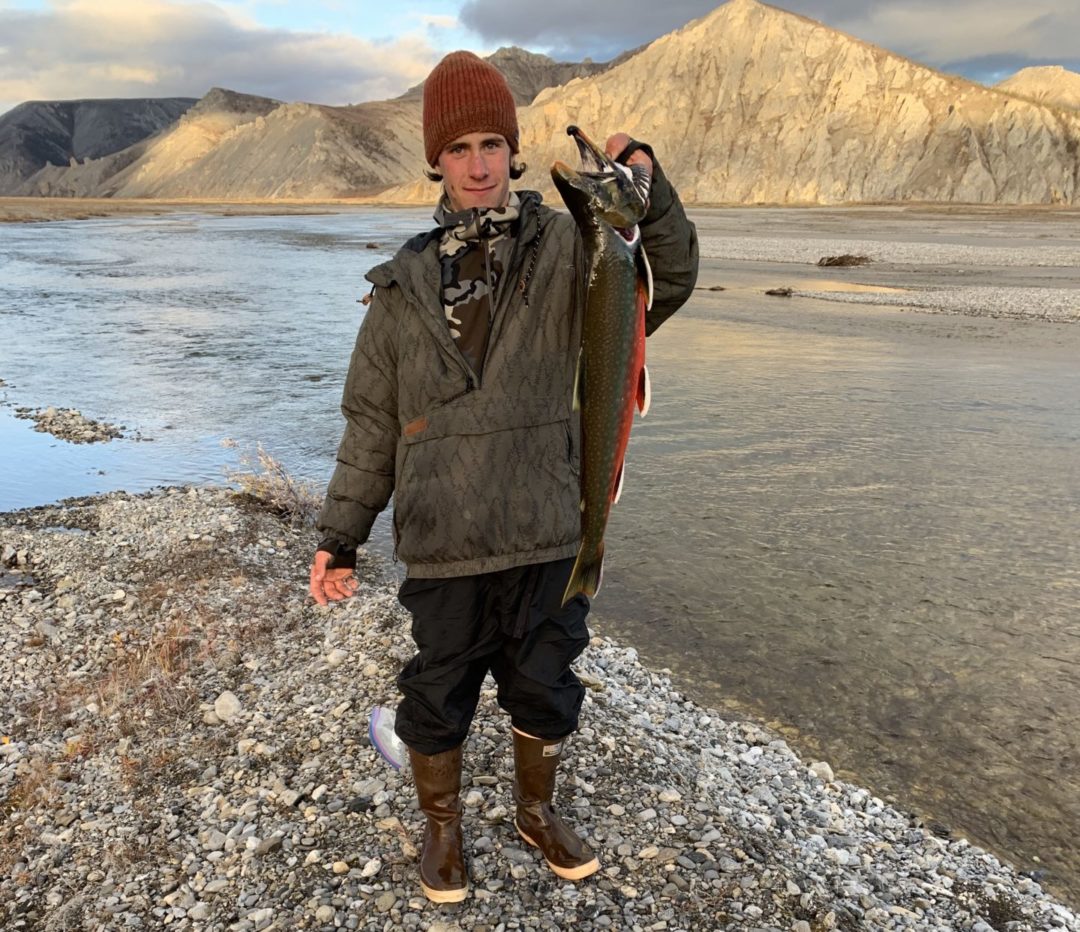
The fishing highpoint came on our final full day on the river. We finally got down into Sheefish country. Sheefish, also known as Inconnu or “Eskimo Tarpon” are incredible fish. They can grow to larger than 40 lbs in the Kobuk River. We fished for them unsuccessfully in 4 different spots that day before we found the “honey hole”.  I was the first one casting and on my 3rd cast, it was game on! When my first Sheefish jumped, I felt like someone had photoshopped a giant fish onto the end of my line. When I landed it, it measured 42 in., we estimated between 30 and 35 lbs. We continued to fish the hole for an hour and quit after 10 Sheefish had been caught and released. We kept the smallest one, at 11 lbs. for dinner. We filetted it and I sautéed it butter with just a little salt and pepper so as to preserve the native flavor of the fish. We all agreed, from a culinary standpoint, it was 5 star.

If you are dreaming of a Brooks Range river trip, and moderate whitewater and fishing are your priorities, the Kobuk River fits the bill quite nicely.

Gray-Headed Chickadee

This June, Arctic Wild will be teaming up with Z-bird Tours for a rafting trip in the Western Brooks Range. Gray-headed chickadeeThe Kugururok River is a great raft trip for many reasons. Our main reason for the trip is to find North America’s hardest to see bird. Recent reports of Gray-headed Chickadees on the Kugururok river, combined with Arctic Wild’s expertise in wilderness travel, and Z-bird’s phenomenal birding abilities, will make this, a trip wilderness birders will be talking about for years.

Here is what Z-Bird’s owner and guide John Puschock has to say about why he is excited to return to the area to get another look a Gray-headed Chickadee.

” Of all the resident bird species in North America north of Mexico, the Gray-headed Chickadee (a.k.a. Siberian Tit) is arguably the most difficult bird to see.  It has a large range in the Old World, inhabiting boreal regions from Scandinavia to eastern Siberia.  In the New World it inhabits only Alaska, Yukon, and the Northwest Territories.  What makes it so difficult to see in North America is that there are almost no roads within its limited range, so just getting to where the birds are is an undertaking.Western Brooks Range, Kugururok RIver

The Gray-headed Chickadee’s preferred habitat is a bit of an enigma.  Various authors say it prefers spruce forest, others a mix of spruce and willow, or just willows.  Even in the Old World, it’s preferences vary from region to region.  In Alaska, it is usually found near isolated cottonwood (poplar) groves along a few north-slope rivers and in mixed scrub near tree-line in the Brooks Range  It’s a cavity nester, often nesting in poplars.
The Gray-headed Chickadee looks similar to Boreal Chickadee, but it’s bigger and has a larger white cheek patch and paler flanks.  The Boreal Chickadee probably evolved from the Gray-headed during the Pleistocene glaciations, and it’s thought that the current New World population is actually the result of the Gray-headed re-entering North America following glaciations.  Competition with the Boreal Chickadee may restrict its range.

Despite their close relationship, there’s no record of the two species hybridizing, which makes an encounter I had in 1998 all the more intriguing: The Kelly Bar on the Noatak River had for years, been the place to go to see the Gray-headed Chickadee, at least up until the mid-1990s.  I was banding birds in Northwest Alaska all summer and  I visited Kelly Bar intermittently.  With each visit I expected to see Gray-heads, but two frustrating months went by with no sightings.

Finally in August I spotted a chickadee with large white cheek patches.  “Finally”, I thought, but then I noticed that it was a colorful bird, as far as chickadees go.  It’s flanks were more like a Boreal Chickadee, with warm tones.  I froze and didn’t look for other field marks, such as white edging on the wing feathers (which would indicate Gray-headed).  I was just trying to comprehend what I was seeing.  And then all too quickly, the bird was gone.  I saw it for only 30 seconds. If I actually saw, what I think I saw, it could have been a hybrid.  But maybe it was a colorful Gray-headed, or a Boreal with more white in the cheek than normal, or maybe my eyes didn’t interpret things correctly.

After 12 years of pondering the brief encounter with the bird, it is time to return and take another look.”

Please join us in June for a fun filled birding adventure.


News from the North

There is much to report from Arctic Wild this March. Trips are filling and we are busy getting everything ready. I’ll write about all that soon. But for now, I want to recommend 2 articles from this weeks news, of interest to fellow arctic enthusiasts.

Out on the Northwest coast near Kotzebue researchers found scores of dead Musk ox encrusted in ice from a winter storm and tidal surge. I hate to imagine the scene. Read more here.

The other news is not so grim. Archeologists in Texas have discovered that Paleo-Indians arrived in North America thousands of years earlier than previously thought. This likely means that they migrated from Siberia not after the glacial maximum of the ice age, but during it! This will give me something to ponder on our Aleutians trip, which is along the likely route taken 15,000 years ago. Read more here.

Mission: Caribou

Mission: Caribou- Trip Report

By Moe Witschard- Guide and Photographer www.moephotography.comCaribou cross an arctic river- Moe Witschard

Flying from Fairbanks in two Heliocouriers, small, but very sturdy bush planes that carried up to 3 people with all our gear, we arrived at the shore of the Beaufort Sea at 70 degrees latitude. We buzzed the area looking for a good camp and I chose a flat area next to Marsh Creek, about a mile from the ocean. Whooosh… minutes later we had landed, were unloading, and then setting up our most deluxe base camp with a huge cook tent that everyone enjoyed spending time in.  We proceeded to spend the last week of June at this camp watching early spring change to early summer.

Caribou in the Arctic Refuge

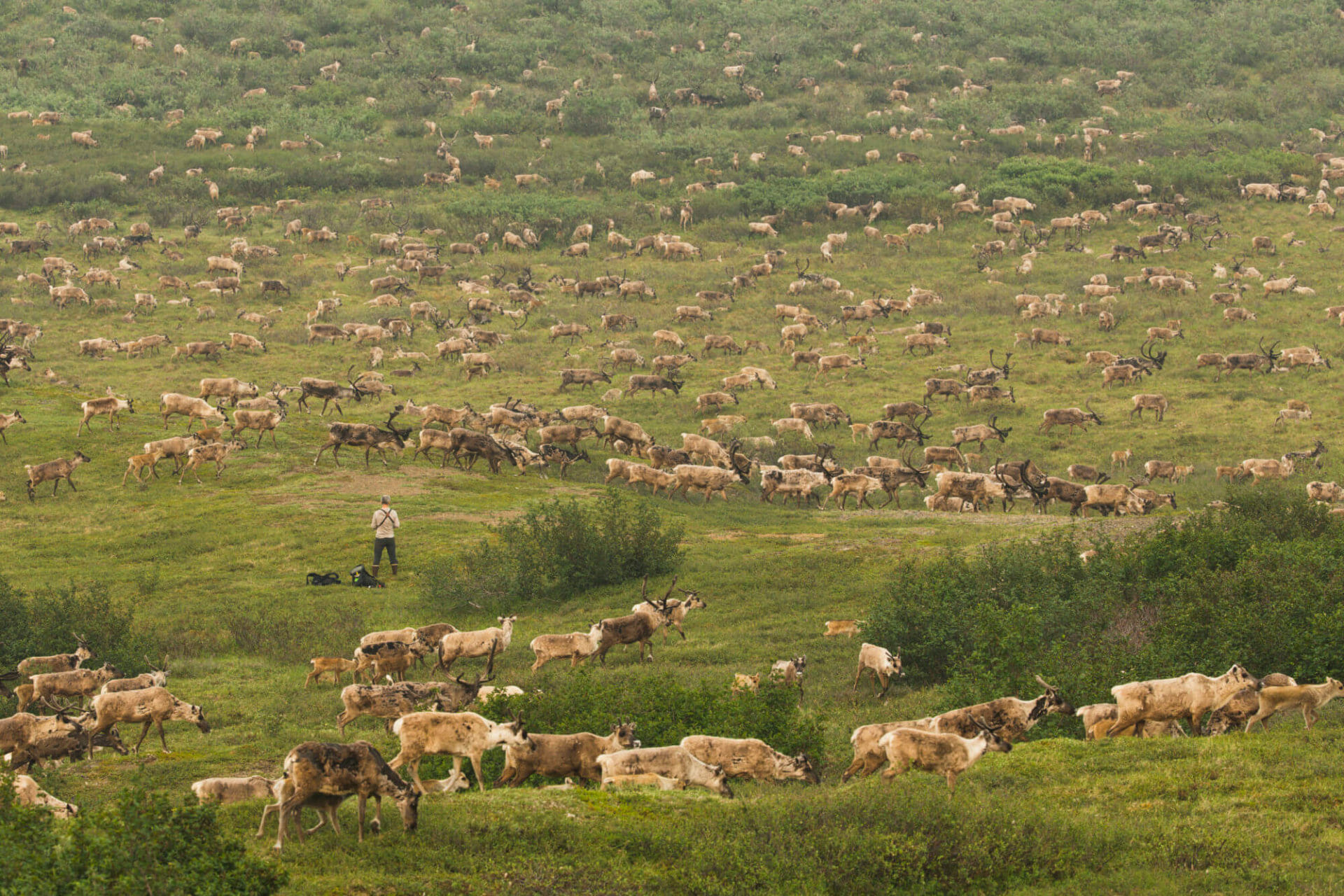
The number one goal of our Mission: Caribou trip was to closely and viscerally experience the magnificence of the Porcupine Caribou Herb migration, while base camping at a location within the Arctic National Wildlife Refuge. By communicating about herd movements with pilots and biologists right before the trip, we were able to drop ourselves right in front of a large west-moving mass of caribou, and all the other animals that move with and respond to the herd.

Each day, we stuffed day-packs with cameras, binoculars, warm clothes, and lots of yummy snacks and then set off in a different direction to hike, explore, and experience the tundra waking up and launching into a short, but furiously productive summer. Some days saw us hiking inland. Other days we hiked to the coast and walked the beaches for hours:  a grey cobble strip with tundra on one side and an ocean full of ice cubes on the other. Totally surreal! The family of four that I was guiding were from Tucson, Arizona. They wanted a vacation where they’d be out of their element. You could see it in their eyes that they’d gotten their wish as they marveled at the unique, humbling, and stunningly gorgeous landscape. Each day, we stopped for lunch at a spot that had firewood and we would build ourselves a nice fire to warm our bones as we replenished ourselves on gourmet bites before setting out to explore again.

Sea-ice in the Beaufort Sea Alaska

HIGHLIGHTS: Seeing thousands and thousands of caribou daily, sometimes right in camp; Seeing a wolverine traveling down the beach up to 100 yds. from us before seeing us and bolting ; The surreal landscape of the Beaufort Sea in early summer: sky, ice, and a little bit of water; Seeing a grizzly bear pass by our camp and move downwind of us until it smelled us and then getting to watch it run a distance of 2 miles in about 7 minutes; SO many different species of birds; Seeing the tundra vegetation come to life – at the start of the week, tiny willows starting to put out leaves. By the end of the week, they had gone to seed…and last but not least: not seeing any bugs until 5 pm on the day before we flew out, when all of a sudden it was summer, bugs were everywhere,  and we were all running for the insect repellent.

If experiencing the essence of caribou migration and the spirit of the Arctic coastal plain in early summer from a deluxe base camp sounds appealing, Mission: Caribou might be the trip.

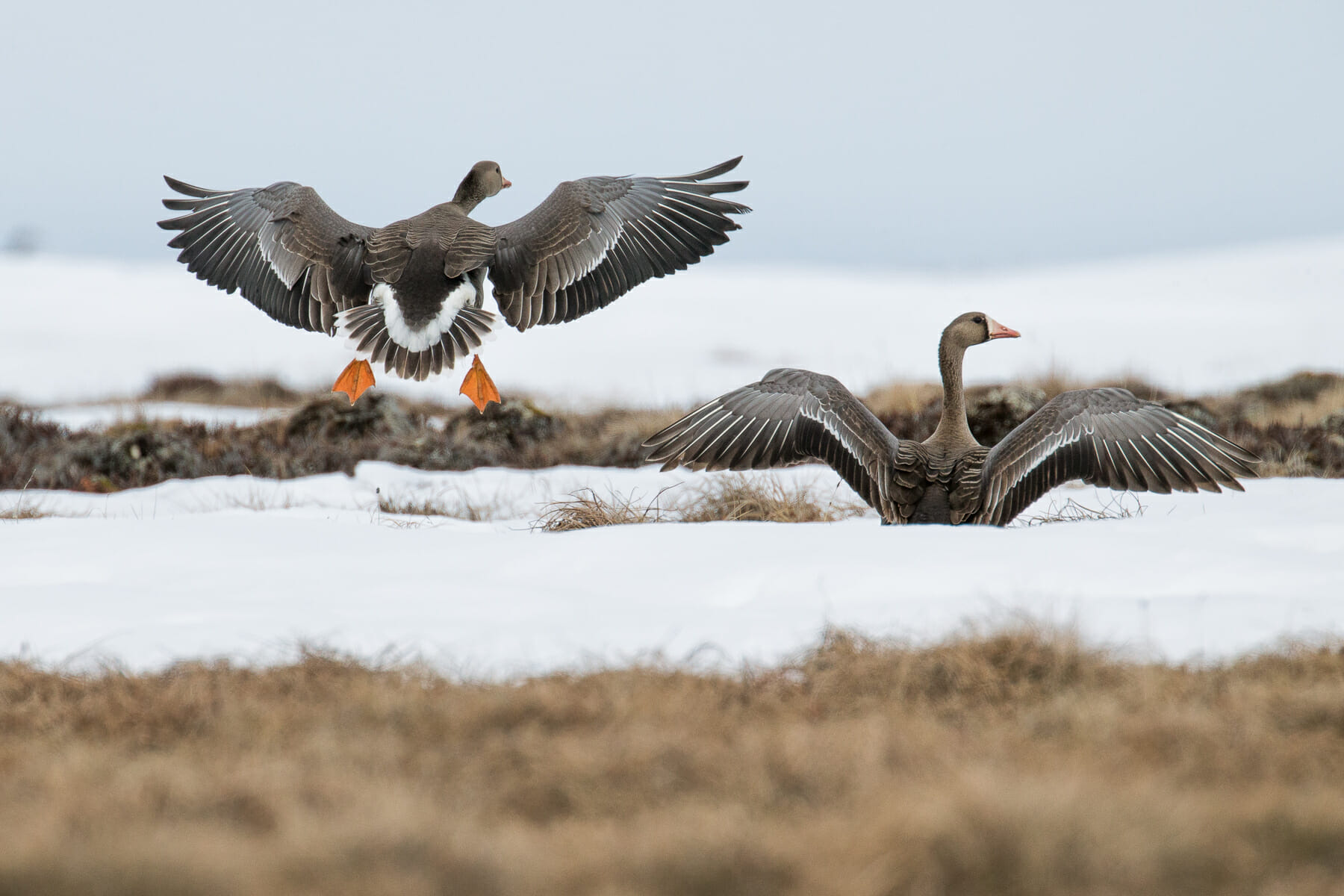
Swan picture from Arctic Alaska

Bears of the Katmai Coast

Trip Report by Michael Wald, Co-owner and guide.

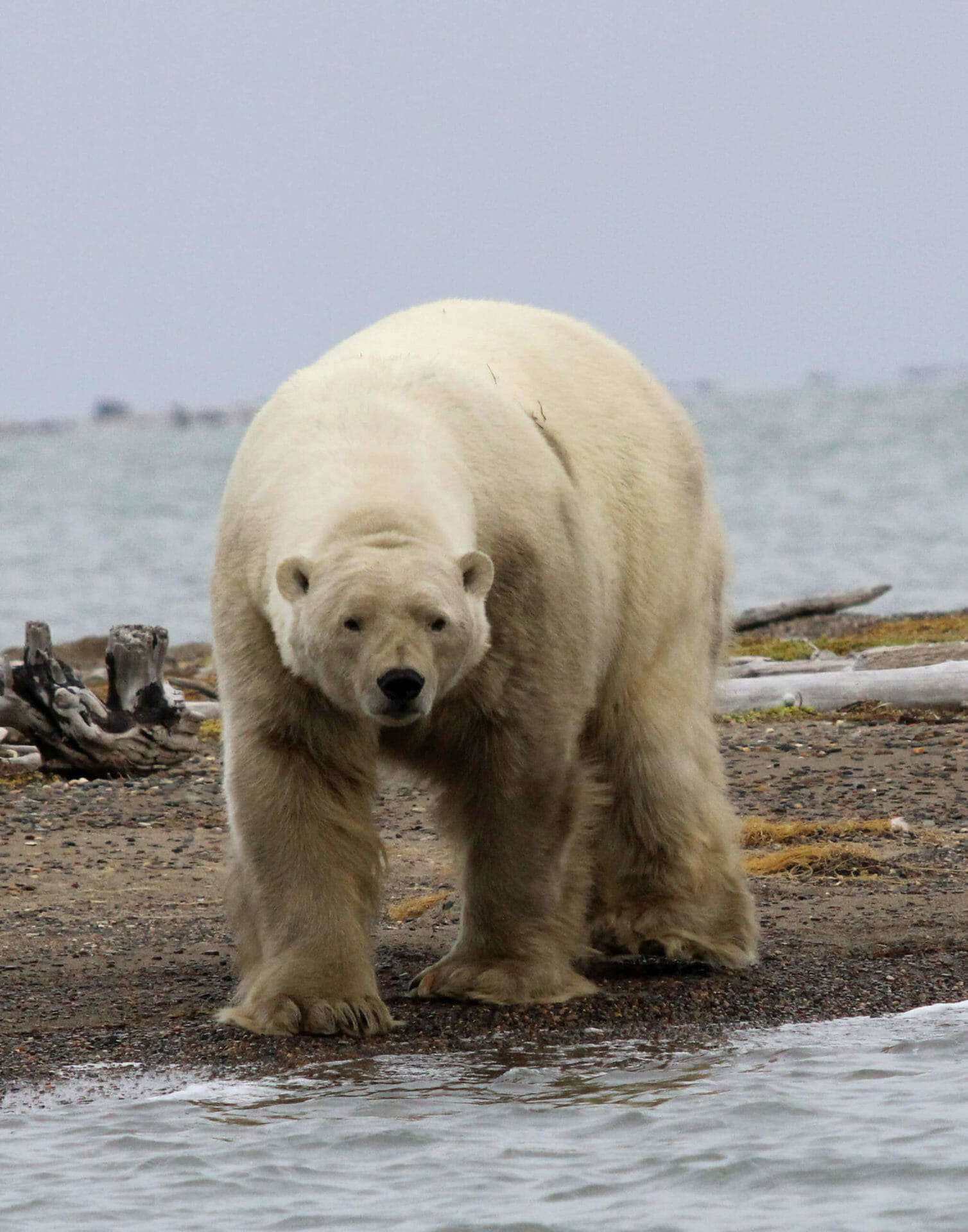
I have to admit that the best trip ideas are rarely mine. Sometimes pilots suggest a new river or point out Katmai National Park Bear viewing tripan area I had never noticed. But very often clients will call me mid-winter and ask me to arrange a custom trip to a new location. I had dreamed of going to the Katmai Coast ever since I came to Alaska in 1991 but it wasn’t until last spring that I got to plan a trip to this remote and beautiful coast.  We were looking for great bear viewing but without so many bears that we couldn’t sleep peacefully. We wanted a variety of hiking, from the tundra, to glacier-covered mountains, to beach hiking, and we wanted a place where we were unlikely to see other people during our week in the wilds. After studying the maps and talking with Katmai National Park Tripfriends who have spent extensive time on the Katmai coast the location for a bear-viewing base camp became obvious. Not only did we get to see bears fighting, fishing, scavenging seal carcasses, and grazing placidly on the sedge meadows, but we were able to explore along the rocky headlands, peer into tide pools rich with sea-life, and hike inland to where the glacier pours down off the active volcano. The bears in Katmai are truly awesome and it takes some acclimation to get used to being around them constantly and having them nap near your camp. But these bears are not interested in people and they Bear viewing in Katmai National Parkgo about their lives as if we were no more significant than a gull (which we aren’t). Some of my favorite moments of the trip were in the evenings when we would get a campfire going and watch the tide recede. Predictably, at low tide our neighborhood bears (a sow with two half grown cubs) would saunter down to the beach and snuffle around in the sand  to see what the waves had dropped on their doorstep. Warmed by the fire, with a glacier-covered volcano in the distance we would watch the bears just being bears on the ragged Pacific coast. What more could we want after a day of tromping around on the tundra? Fresh- baked brownies anyone?