<?xml version="1.0" encoding="UTF-8"?>
<rss version="2.0"
	xmlns:content="http://purl.org/rss/1.0/modules/content/"
	xmlns:wfw="http://wellformedweb.org/CommentAPI/"
	xmlns:dc="http://purl.org/dc/elements/1.1/"
	xmlns:atom="http://www.w3.org/2005/Atom"
	xmlns:sy="http://purl.org/rss/1.0/modules/syndication/"
	xmlns:slash="http://purl.org/rss/1.0/modules/slash/"
	>

<channel>
	<title>Arctic Wild</title>
	<atom:link href="http://www.arcticwild.com/blog/feed/" rel="self" type="application/rss+xml" />
	<link>http://www.arcticwild.com/blog</link>
	<description>The Blog.</description>
	<lastBuildDate>Wed, 04 Aug 2010 20:00:30 +0000</lastBuildDate>
	<language>en</language>
	<sy:updatePeriod>hourly</sy:updatePeriod>
	<sy:updateFrequency>1</sy:updateFrequency>
	<generator>http://wordpress.org/?v=3.0.1</generator>
		<item>
		<title>Alaska Kiddie Camp-out</title>
		<link>http://www.arcticwild.com/blog/2010/08/alaska-kiddie-campout/</link>
		<comments>http://www.arcticwild.com/blog/2010/08/alaska-kiddie-campout/#comments</comments>
		<pubDate>Wed, 04 Aug 2010 17:28:20 +0000</pubDate>
		<dc:creator>Arctic Wild</dc:creator>
				<category><![CDATA[Uncategorized]]></category>

		<guid isPermaLink="false">http://www.arcticwild.com/blog/?p=260</guid>
		<description><![CDATA[By Michael Wald, Co-owner and Guide I will admit, when we first had kids I feared our days of wilderness travel might be over. But while we haven&#8217;t launched off on any month long canoe trips with our boys (now age 2 and 4) we do manage to get them and ourselves out into the [...]]]></description>
			<content:encoded><![CDATA[<p>By Michael Wald, Co-owner and Guide<a href="http://www.arcticwild.com/blog/wp-content/uploads/2010/07/Imported-Photos-00053.jpg"><img class="alignright" title="Alaska Family  Camping" src="http://www.arcticwild.com/blog/wp-content/uploads/2010/07/Imported-Photos-00053-300x199.jpg" alt="Alaska Camping with Kids" width="300" height="199" /></a></p>
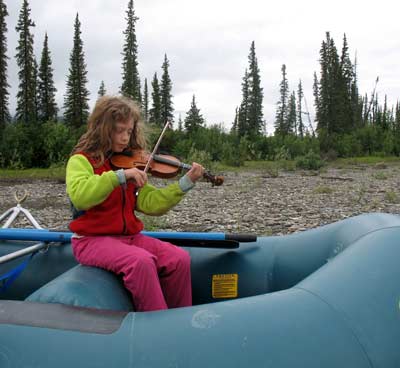
<p>I will admit, when we first had kids I feared our days of wilderness  travel might be over. But while we haven&#8217;t launched off on any month  long canoe trips with our boys (now age 2 and 4) we do manage to get  them and ourselves out into the wilds of Alaska with some regularity. We  have learned that stalking caribou with a babbling 1 year old isn&#8217;t the  best way to get your winter meat. We have learned that they like  picking berries better than hiking past them and we have learned that we  need to allot plenty of time for swimming in ice cold lakes and rivers.  Fast and light isn&#8217;t how our family travels but we have a great time  out in the wilds. Last week we took our boys to Tangle Lakes in the  Alaska Range along with 2 other families for 5 days of paddling, fishing  and berry picking.  We brought <a href="http://www.arcticwild.com/blog/wp-content/uploads/2010/07/Imported-Photos-001621.jpg"><img class="alignright size-medium wp-image-261" title="Imported Photos 00162" src="http://www.arcticwild.com/blog/wp-content/uploads/2010/07/Imported-Photos-001621-300x199.jpg" alt="Alaska Fishing with Kids" width="300" height="199" /></a>along one of the big cook tents we use  on our guided <a href="http://www.arcticwild.com/trips/basecamp.html">Base camp </a>trips  so we could all hide from the rain and while the fishing wasn&#8217;t as good  as a <a href="http://www.arcticwild.com/schedule/itineraries/2010/kobuk_raft.html">Kobuk  River</a> trip, nothing beats watching a 4 year-old hook a grayling. In  a couple of weeks I&#8217;m going to try backpacking with my boys. We might  not get very far but I&#8217;ll guarantee you we are gonna have a lot of fun  getting there. If any of you have a young family that would have fun  camping in the wild&#8217;s of Alaska we would be happy to plan a <a href="http://www.arcticwild.com/trips/custom.html">custom</a> trip  for you, in the arctic or almost anywhere in Alaska.</p>
]]></content:encoded>
			<wfw:commentRss>http://www.arcticwild.com/blog/2010/08/alaska-kiddie-campout/feed/</wfw:commentRss>
		<slash:comments>0</slash:comments>
		</item>
		<item>
		<title>Sketches from the Western Arctic</title>
		<link>http://www.arcticwild.com/blog/2010/07/sketches-from-the-western-arctic/</link>
		<comments>http://www.arcticwild.com/blog/2010/07/sketches-from-the-western-arctic/#comments</comments>
		<pubDate>Sun, 04 Jul 2010 08:38:20 +0000</pubDate>
		<dc:creator>Arctic Wild</dc:creator>
				<category><![CDATA[Uncategorized]]></category>

		<guid isPermaLink="false">http://www.arcticwild.com/blog/?p=239</guid>
		<description><![CDATA[By Cindy Hunt- Ritzman, I’ve always wondered why my husband Dan loves guiding for Arctic Wild. Every year since I’ve known him, he usually disappears for a few weeks in Alaska, returning sunburned, disheveled, yet also happy and more ‘centered’. This year I had the opportunity to travel with him, on a trip with 4 [...]]]></description>
			<content:encoded><![CDATA[<p>By Cindy Hunt- Ritzman,</p>
<p>I’ve always wondered why my husband Dan loves guiding for Arctic Wild. Every year since I’ve known him, he usually <a href="http://www.arcticwild.com/blog/wp-content/uploads/2010/07/campfirstnight.jpg"><img class="alignright size-medium wp-image-240" title="campfirstnight" src="http://www.arcticwild.com/blog/wp-content/uploads/2010/07/campfirstnight-300x122.jpg" alt="Camping on the Kokolik River" width="300" height="141" /></a>disappears for a few weeks in Alaska, returning sunburned, disheveled, yet also happy and more ‘centered’.</p>
<p>This year I had the opportunity to travel with him, on a trip with 4 other people canoeing the <a href="http://www.arcticwild.com/schedule/itineraries/2010/Caribou_canoe_kokolik.html">Kokolik river</a>.</p>
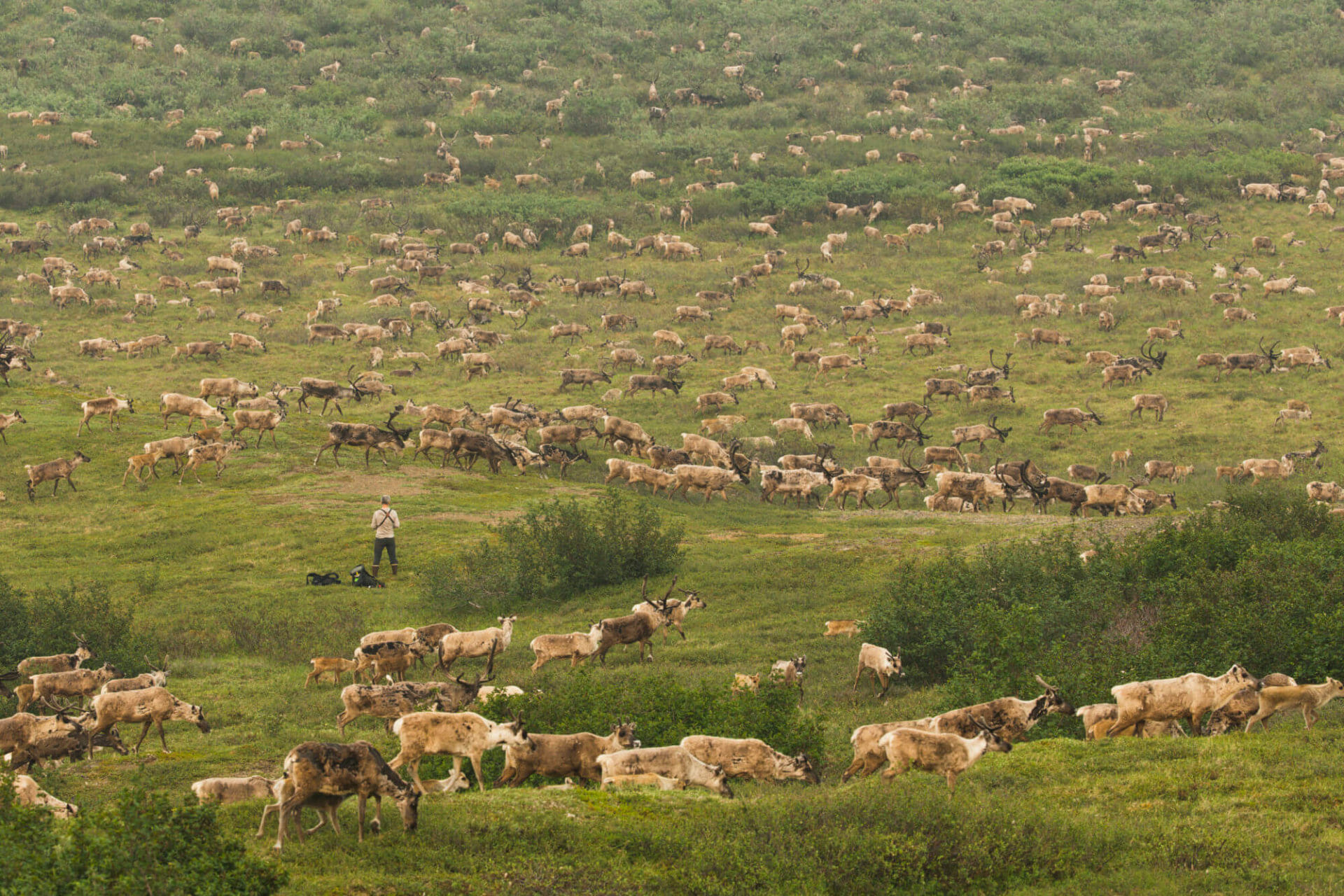
<p>The first time I truly realized this trip was special was when it took two bush plane pick-up and landings to get there and back. I could see thousands of caribou during the flights. I also saw herds of muskox and watched a grizzly bear chase something, stumble and somersault! Before I knew it, our pilot Dirk was landing the plane next to the Kokolik river. I climbed off, helped unload the baggage and watched the plane fly away, leaving us far from civilization.<a href="http://www.arcticwild.com/blog/wp-content/uploads/2010/07/cookingdinner.jpg"><img class="alignright size-medium wp-image-241" title="cookingdinner" src="http://www.arcticwild.com/blog/wp-content/uploads/2010/07/cookingdinner-300x122.jpg" alt="De Long Mountains Alaska" width="300" height="122" /></a></p>
<p>Photos really don’t do this place justice. I really hadn&#8217;t appreciated how far and wide and north Alaska is. The terrain and wide skies are beautiful. Even the clouds seem bigger here. The scenery was inspiring. After we set up camp, I followed some muddy caribou tracks to the river and found a place to sit, beginning a short series of trip sketches.</p>
<p>During our trip, we rowed over 60 miles through some varied landscapes. Initially we’d hoped to see the migrating caribou. On the very first day we began encountering animals I didn&#8217;t even think I&#8217;d have a chance to see. <a href="http://www.arcticwild.com/blog/wp-content/uploads/2010/07/wolverineridge.jpg"><img class="alignright size-medium wp-image-242" title="wolverineridge" src="http://www.arcticwild.com/blog/wp-content/uploads/2010/07/wolverineridge-300x122.jpg" alt="Alaska Wildlife Trips" width="300" height="122" /></a></p>
<p>Over the duration of the trip, we saw thousands of caribou (some with babies), some very close. Also 3 grizzlies, a beautiful white/tan wolf, 3 wolverines (I think it was a female and her 2 young), herds of muskoxen, 2 foxes, loads of fat marmots and arctic squirrels. Terrific birding- we saw and heard many ptarmigan, sandpipers, plovers, gulls, ruddy turnstones, harlequin ducks, perigrine, gyrfalcons, rough-legged hawks, gold eagles, merlins, canada geese and more.</p>
<p>There were no real trees. Many bushes, but mostly grass and flowers&#8211; food for caribou. The wildflowers were stunning.</p>
<p>Almost every day we hiked, then canoed to new places to camp. The sun never set, it was bright all night, much to everyone’s delight- especially for the birders in the group.<a href="http://www.arcticwild.com/blog/wp-content/uploads/2010/07/setting-up-tent.jpg"><img class="size-medium wp-image-244 alignright" title="setting up tent" src="http://www.arcticwild.com/blog/wp-content/uploads/2010/07/setting-up-tent-300x123.jpg" alt="Camping in Alaska" width="300" height="123" /></a></p>
<p>Dan, as the guide, did the cooking and coffee making for us. No lower-48 restaurant has the view we enjoyed every night! H also brought a scope, and pointed out other views for us to see. He was quite busy, and obviously enjoying himself. I couldn&#8217;t hog him all to myself. After dinner the group would sip cider, coffee or tea and talk about what we’d seen during the day. We had an fun group of people with lively discussions, especially regarding trying to identify the bird songs we heard.</p>
<p>How was the weather? A little bipolar. Some days, warm in the upper 60&#8242;s turning quickly to cool and stormy. Hail, <a href="http://www.arcticwild.com/blog/wp-content/uploads/2010/07/arcticrainstorm.jpg"><img class="alignright size-medium wp-image-243" title="arcticrainstorm" src="http://www.arcticwild.com/blog/wp-content/uploads/2010/07/arcticrainstorm-300x119.jpg" alt="Arctic Alaska Adventure" width="300" height="119" /></a>thunderstorms and wind. Rainbows, double and triple rainbows, sunny blue skies. Extremely beautiful clouds, stormclouds or white fluffy clouds.</p>
<p>You can hopefully see from my sketches the basic camp that was set up&#8211; a cook tent, washing area and another tent where we could huddle inside if it was raining. Everyone set up their personal tents far away from the cook tent, and from each other. I was fascinated by the skies and textures of the rocks, flowers and grasses.<br />
<a href="http://www.arcticwild.com/blog/wp-content/uploads/2010/07/lookingdownatriver.jpg"><img class="alignright size-medium wp-image-245" title="lookingdownatriver" src="http://www.arcticwild.com/blog/wp-content/uploads/2010/07/lookingdownatriver-300x125.jpg" alt="Kokolik River Alaska" width="300" height="125" /></a><br />
Unfortunately, despite the long sunny days, the trip seemed to end quickly. We canoed down the river one last time, unloaded our gear and waited for the plane to return us to Fairbanks.</p>
<p>I’m glad I was able to take the trip, and feel fortunate to have seen the wild in the wild. Who knows how long this piece of country will remain as it is? One day I hope to bring my son, so he’ll be able to view this beauty for himself.</p>
<p style="text-align: center;">
<div id="attachment_246" class="wp-caption aligncenter" style="width: 310px"><a href="http://www.arcticwild.com/blog/wp-content/uploads/2010/07/dansleeps.jpg"><img class="size-medium wp-image-246 " title="dansleeps" src="http://www.arcticwild.com/blog/wp-content/uploads/2010/07/dansleeps-300x125.jpg" alt="Alaska Wilderness Guide Dan Ritzman" width="300" height="125" /></a><p class="wp-caption-text">Hard working guide</p></div>
]]></content:encoded>
			<wfw:commentRss>http://www.arcticwild.com/blog/2010/07/sketches-from-the-western-arctic/feed/</wfw:commentRss>
		<slash:comments>1</slash:comments>
		</item>
		<item>
		<title>Exploring the Colville Headwaters</title>
		<link>http://www.arcticwild.com/blog/2010/06/exploring-the-colville-headwaters/</link>
		<comments>http://www.arcticwild.com/blog/2010/06/exploring-the-colville-headwaters/#comments</comments>
		<pubDate>Mon, 21 Jun 2010 09:06:50 +0000</pubDate>
		<dc:creator>Arctic Wild</dc:creator>
				<category><![CDATA[Uncategorized]]></category>

		<guid isPermaLink="false">http://www.arcticwild.com/blog/?p=233</guid>
		<description><![CDATA[By Co-owner and guide Michael Wald Summer is in full swing with small groups of adventurous souls scattered about the tundra, binoculars trained on caribou, wolves, falcons and loons. I just returned from a wonderful canoe trip in the Colville Headwaters. As soon as we landed we new we were in for a great trip. [...]]]></description>
			<content:encoded><![CDATA[<p>By Co-owner and guide Michael Wald</p>
<p>Summer is in full swing with small groups of adventurous souls scattered about the tundra, binoculars trained on caribou, wolves, falcons and loons. I just returned from a wonderful canoe trip in the Colville Headwaters. As soon as we landed we new we were in for a great trip. Bands of caribou were on every mountain, the sun was shining and there was not a bug in sight. Starting as high on the Nuka River as we dared we spent a few days hiking along the arctic divide before inflating our boats and heading down stream. The river was so small in its headwaters that we had to line the boats at first but once a couple side creeks added to the flow it was smooth sailing. Ok not totally smooth sailing, the Nuka is fast, shallow and rocky. I was in a heavier gear laden canoe and the others paddles inflatable kayaks so we each had our own difficulties. After the first full day of paddling the kayakers gained skill and confidence and the river gained enough depth that the miles clicked by without to much trouble. I will write more about the wildlife, hiking and adventures but for now I just wanted to share a little video of longtime friend and client Jerry enjoying himself in the De Long Mountains.</p>
<object width="425" height="344"><param name="movie" value="http://www.youtube.com/v/UmkqtHgIfgk"></param><param name="allowFullScreen" value="true"></param><param name="allowscriptaccess" value="always"></param><param name="flashvars" value="" /><embed src="http://www.youtube.com/v/UmkqtHgIfgk" type="application/x-shockwave-flash" allowscriptaccess="always" allowfullscreen="true" width="425" height="344" flashvars=""></embed></object>
]]></content:encoded>
			<wfw:commentRss>http://www.arcticwild.com/blog/2010/06/exploring-the-colville-headwaters/feed/</wfw:commentRss>
		<slash:comments>1</slash:comments>
		</item>
		<item>
		<title>Guide Training 2010  / River Safety</title>
		<link>http://www.arcticwild.com/blog/2010/05/guide-training-2010-river-safety/</link>
		<comments>http://www.arcticwild.com/blog/2010/05/guide-training-2010-river-safety/#comments</comments>
		<pubDate>Sat, 29 May 2010 08:12:46 +0000</pubDate>
		<dc:creator>Arctic Wild</dc:creator>
				<category><![CDATA[Uncategorized]]></category>

		<guid isPermaLink="false">http://www.arcticwild.com/blog/?p=224</guid>
		<description><![CDATA[By Guide, Co-Owner, and Swift-water Rescue Student, Michael Wald Each and every spring Arctic Wild guides head-out on the river to hone our skills, shake out the cobwebs and enjoy the camaraderie of camping with our friends/ co-workers. This year Arctic Wild organized a Swiftwater Rescue Course with a fantastic instructor from out of state. [...]]]></description>
			<content:encoded><![CDATA[<p>By Guide, Co-Owner, and Swift-water Rescue Student, Michael Wald</p>
<p>Each and every spring Arctic Wild guides head-out on the ri<a href="http://www.arcticwild.com/blog/wp-content/uploads/2010/05/IMGP1322.jpeg"><img class="alignright  size-medium wp-image-225" title="IMGP1322" src="http://www.arcticwild.com/blog/wp-content/uploads/2010/05/IMGP1322-300x225.jpg" alt="Alaska Rafting Saftey Course" width="300" height="225" /></a>ver to hone our skills, shake out the cobwebs and enjoy the camaraderie of camping with our friends/ co-workers. This year Arctic Wild organized a Swiftwater Rescue Course with a fantastic instructor from out of state. For two full days we donned dry-suits while Abi Polsby from <a href="http://sierrarescue.com/" target="_blank">Rescue 3 International </a>put us through a series of challenging and informative exercises. We practiced rescue swimming, tossing throw ropes, and flipping rafts back over. We learned new methods for freeing boats stuck on the rocks, new knots, and all about how to keep rafting and canoeing in Alaska as safe as possible. We swam hard in the fast glacial river all day long and stayed up late around the fire telling river stories. Though all of us have spent years and years on the river, every one of us left the course better equipped to deal with emergencies should they arise. And more importantly, I think we gained new skills for avoiding trouble whether paddling the <a href="http://www.arcticwild.com/schedule/itineraries/2010/nigu_raft_gates_arctic.html">Nigu</a>, the <a href="http://www.arcticwild.com/schedule/itineraries/2010/alatna_river_canoe.html">Alatna</a> or the frothy <a href="http://www.arcticwild.com/schedule/itineraries/2010/copper_raft.html">Copper River.</a><a href="http://www.arcticwild.com/blog/wp-content/uploads/2010/05/IMGP1358.jpeg"><img class="alignright  size-medium wp-image-226" title="IMGP1358" src="http://www.arcticwild.com/blog/wp-content/uploads/2010/05/IMGP1358-300x225.jpg" alt="Alaska River Rescue Class" width="300" height="225" /></a></p>
<p>Stellar guide, Cynthia Merrow summed it up best &#8220;What a great life we have that we can act like kids in the river, and still have a ton to learn in our profession.&#8221;</p>
<p>A big thanks to our guides for taking the time to improve important skills. And thanks again to Abi for an outrageously fun and informative weekend.</p>
]]></content:encoded>
			<wfw:commentRss>http://www.arcticwild.com/blog/2010/05/guide-training-2010-river-safety/feed/</wfw:commentRss>
		<slash:comments>1</slash:comments>
		</item>
		<item>
		<title>Forecasting Another Great Summer in the Arctic</title>
		<link>http://www.arcticwild.com/blog/2010/05/forecasting-another-great-summer-in-the-arctic/</link>
		<comments>http://www.arcticwild.com/blog/2010/05/forecasting-another-great-summer-in-the-arctic/#comments</comments>
		<pubDate>Tue, 25 May 2010 07:31:40 +0000</pubDate>
		<dc:creator>Arctic Wild</dc:creator>
				<category><![CDATA[Uncategorized]]></category>

		<guid isPermaLink="false">http://www.arcticwild.com/blog/?p=215</guid>
		<description><![CDATA[By Co-Owner and guide Michael Wald As leaves burst from the birches here in Fairbanks and birds begin incubating eggs, we are busy making the final arrangements for our summer in the Brooks Range and beyond. The boats and tents are ready thanks to Bill. Flights are booked with longtime friends Coyote Air and Yukon [...]]]></description>
			<content:encoded><![CDATA[<p>By Co-Owner and guide Michael Wald<a href="http://www.arcticwild.com/blog/wp-content/uploads/2010/05/20.jpg"><img class="alignright size-medium wp-image-216" title="Arctic Refuge River" src="http://www.arcticwild.com/blog/wp-content/uploads/2010/05/20-300x200.jpg" alt="Arctic Alaska River Trip" width="300" height="200" /></a></p>
<p>As leaves burst from the birches here in Fairbanks and birds begin incubating eggs, we are busy making the final arrangements for our summer in the Brooks Range and beyond. The boats and tents are ready thanks to Bill. Flights are booked with longtime friends <a href="http://flycoyote.com/">Coyote Air </a>and <a href="http://www.yukonair.com/">Yukon Air</a> amongst other exceptional pilots. This weekend we are heading down to the Nenana River to participate in a swift-water rescue course that we are hosting and as soon as the pallet of food arrives from the natural foods distributor we can begin packing our bags for the first trips of the year.</p>
<p>In the news we read that tourism in Alaska is down by nearly 40% and we have had some anxious times this winter wondering if trips would fill. Contrary to the news, people from all over the world continue to call us up and inquire about seeing this vast and unspoiled Alaska landscape, rich with human and natural history. I&#8217;d like to think that our trips are a breed apart and that the desire for truly wild landscapes does not waver. It is heartening to see so many people prioritizing wilderness, and more and more people are bringing the whole family.</p>
<p>Our June trips are nearly full and we are looking forward to a very busy July exploring Katmai, Lake Clark,<a href="http://www.arcticwild.com/blog/wp-content/uploads/2010/05/Copper-River-8.09-8203.jpg"><img class="alignright size-medium wp-image-219" title="Copper River 8.09-8203" src="http://www.arcticwild.com/blog/wp-content/uploads/2010/05/Copper-River-8.09-8203-300x199.jpg" alt="Rafting in Wrangell St. Elias National Park" width="300" height="199" /></a> and <a href="http://www.arcticwild.com/schedule/itineraries/2010/copper_raft.html">Wrangell St. Elias National Parks </a>with a series of <a href="http://www.arcticwild.com/trips/custom.html">custom trips</a>. Our new wildlife base camp trip where we will intercept the <a href="http://www.arcticwild.com/schedule/itineraries/2010/Mission_Caribou_Arctic_Refuge.html">Porcupine Caribou Herd</a> is poised to be a new classic. And I&#8217;m excited to be guiding a totally exploratory canoe trip on the <a href="http://www.arcticwild.com/schedule/itineraries/2010/Nuka.html">Nuka River</a> in the upper Colville. Check back in July to see what we find.</p>
<p>But fear not, we still have space available all summer long if you want to join the fun.</p>
<p>In June there is space on the <a href="http://www.arcticwild.com/schedule/itineraries/2010/Arctic_Backpack_Archemides_Western.html">Caribou Migration Backpack</a>, which will literally join the migration of the Western Arctic Herd.</p>
<p>In July you could explore the Arctic National Wildlife Refuge on our <a href="http://www.arcticwild.com/schedule/itineraries/2010/Highpeaks_ANWR_backpacking.html">High peaks Backpack.</a> Or  head by plane and boat to the far flung <a href="../../schedule/itineraries/2010/Umnak_Basecamp_Geyser.html">Aleutians</a> for a week of hot-springs and hiking.</p>
<p>And in August I am personally really looking forward to paddling the <a href="http://www.arcticwild.com/schedule/itineraries/2010/nigu_raft_gates_arctic.html">Nigu River</a> and watching all those caribou heading south.</p>
<p>As you can see by reading through this blog we had a great winter, between lighting lake methane, pack rafting in Kauai, repairing rafts, crabbing in Haines, and taking a winter trip to the North-slope. But summer in Alaska just can&#8217;t be beat and I&#8217;m excited to get back on the tundra and rivers. I hope you will join us.</p>
]]></content:encoded>
			<wfw:commentRss>http://www.arcticwild.com/blog/2010/05/forecasting-another-great-summer-in-the-arctic/feed/</wfw:commentRss>
		<slash:comments>0</slash:comments>
		</item>
		<item>
		<title>Arctic Oil Spill</title>
		<link>http://www.arcticwild.com/blog/2010/05/arctic-oil-spill/</link>
		<comments>http://www.arcticwild.com/blog/2010/05/arctic-oil-spill/#comments</comments>
		<pubDate>Fri, 07 May 2010 07:23:56 +0000</pubDate>
		<dc:creator>Arctic Wild</dc:creator>
				<category><![CDATA[Uncategorized]]></category>

		<guid isPermaLink="false">http://www.arcticwild.com/blog/?p=210</guid>
		<description><![CDATA[By Dan Ritzman-  Guide and Blogger The Deepwater Horizon oil disaster in the Gulf of Mexico reminds us that the price of offshore oil drilling is the constant risk of environmental devastation. In Alaska, we know this through bitter experience. Just over 21 years ago the Exxon Valdez ran aground on Bligh Reef and spilled [...]]]></description>
			<content:encoded><![CDATA[<p><a href="http://www.arcticwild.com/blog/wp-content/uploads/2010/05/NYTimes-copy.jpg"><img class="aligncenter size-large wp-image-212" title="NYTimes copy" src="http://www.arcticwild.com/blog/wp-content/uploads/2010/05/NYTimes-copy-563x1024.jpg" alt="Arctic Oil Spill" width="563" height="1024" /></a>By Dan Ritzman-  Guide and Blogger</p>
<p>The Deepwater Horizon oil disaster in the Gulf of Mexico reminds us that the price of offshore oil drilling is the constant risk of environmental devastation. In Alaska, we know this through bitter experience. Just over 21 years ago the Exxon Valdez ran aground on Bligh Reef and spilled 11 million gallons of oil into the pristine waters and rich fishing grounds of Prince William Sound. The economies of those affected fishing villages have never recovered, and to this day if you walk the beaches of the Sound and dig down you can still find oil.</p>
<p>Now, even as skimmers and fishing boats scramble in the Gulf to try to keep the oil from shore, another fleet is preparing to set sail for America’s Arctic Ocean&#8211;to drill for more oil. Interior Secretary Ken Salazar has authorized exploratory drilling in the fragile arctic waters in less than 60 days. The Minerals Management Service&#8211;the same Interior Department division that okayed BP’s Gulf drilling project with no environmental review&#8211;acknowledges that a large spill in the Arctic could have terrible consequences, but concludes that the chance of such a spill is “too remote and speculative an event” to warrant analysis.</p>
<p>I have been fortunate in my life to spend time in arctic Alaska. This remote region is one of the wildest spots left on the globe. I’ve watched walrus gather on ice floes, puffins “fly” through the water, and polar bears prowl the ice edge. I have traveled with Alaska Native people, who have lived on these lands and waters for hundreds of generations, and listened as they describe their connections to this land and importance of these animals to their culture and subsistence. A major spill could leave oil in these waters for decades, killing whales, seals, and fish, and bringing to an end Alaska Natives’ ancient way of life.</p>
<p>The Arctic is already paying the price for our fossil fuel habit. Northern Alaska is warming at twice the rate of the lower 48. The people of the North Slope see the impacts every day&#8211;in loss of sea ice, changes in animal abundance and behavior, and the loss of important subsistence opportunities. To see the impacts of oil development they need only look at Prudhoe Bay, one of the world’s largest industrial complexes. Hundreds of spills involving tens of thousands of gallons of crude oil and other petroleum products occur annually. Decades-old diesel spill sites still show little vegetation re-growth. Gravel fill, excavation, and waste disposal alone have destroyed 17,000 acres of wildlife and marine habitat.</p>
<p>Now big oil is working to push this development offshore. Should an oil spill happens here, the response capabilities are a fraction of what is now proving inadequate in the Gulf. There, within 24 hours, 32 spill-response vehicles, 1 million feet of containment boom, and at least six firefighting vessels were able to muster. If a similar situation occurred in the Chukchi Sea, there would be only 13 spill-response vehicles, less than 3,000 feet of containment boom, and a single firefighting system.</p>
<p>The White House has pledged that no additional offshore drilling would be authorized until a government investigation into the Gulf of Mexico disaster is complete. This pledge must include Shell’s  upcoming drilling in the Chukchi Sea. Next, we must move America as quickly as possible to a clean energy economy. Rather than drilling in the Arctic ocean or Gulf of Mexico, we can embrace 21st century sustainable energy solutions that make cars go farther, promote conservation, invest in clean, renewable energy, and protect our natural heritage.</p>
<p>The Arctic&#8211;for now&#8211;is still vibrant and alive. When I visit the <a href="http://www.arcticwild.com/schedule/itineraries/2010/caribou_raft_Kongakut.html">Arctic coast</a> next month I’ll see sandpipers who have flown over the Gulf oil spill on their way back to their summer home where they will hatch a new generation. President Obama must act now to ensure that their home is not sacrificed to tomorrow’s oil disaster.</p>
<p>https://secure2.convio.net/sierra/site/Advocacy?cmd=display&amp;page=UserAction&amp;id=4358</p>
]]></content:encoded>
			<wfw:commentRss>http://www.arcticwild.com/blog/2010/05/arctic-oil-spill/feed/</wfw:commentRss>
		<slash:comments>0</slash:comments>
		</item>
		<item>
		<title>Heros of Arctic Alaska</title>
		<link>http://www.arcticwild.com/blog/2010/04/heros-of-arctic-alaska/</link>
		<comments>http://www.arcticwild.com/blog/2010/04/heros-of-arctic-alaska/#comments</comments>
		<pubDate>Sat, 10 Apr 2010 05:31:46 +0000</pubDate>
		<dc:creator>Arctic Wild</dc:creator>
				<category><![CDATA[Uncategorized]]></category>

		<guid isPermaLink="false">http://www.arcticwild.com/blog/?p=206</guid>
		<description><![CDATA[By Dan Ritzman, Arctic Wild guide and Alaska Program Director for the Sierra Club. Over the past month we have lost two of the great champions for Alaska’s wild places – Stewart Udall and Dr Ed Wayburn Stewart Udall grew up in the southwest but he has left his mark on the wild lands across [...]]]></description>
			<content:encoded><![CDATA[<p>By Dan Ritzman, Arctic Wild guide and Alaska Program Director for the  Sierra Club.</p>
<p>Over the past month we have lost two of the great champions for Alaska’s wild places – Stewart Udall and Dr Ed Wayburn</p>
<p>Stewart Udall grew up in the southwest but he has left his mark on the wild lands across this</p>
<div id="attachment_207" class="wp-caption alignright" style="width: 310px"><a href="http://www.arcticwild.com/blog/wp-content/uploads/2010/04/Udall.jpg"><img class="size-full wp-image-207" title="Udall" src="http://www.arcticwild.com/blog/wp-content/uploads/2010/04/Udall.jpg" alt="Arctic National Wildlife Refuge Champion" width="300" height="225" /></a><p class="wp-caption-text">Stewart Udall (January 31, 1920 – March 20, 2010)</p></div>
<p>country. As Secretary of the Interior for Presidents John F. Kennedy and Lyndon B. Johnson, Udall played a key role in fostering environmental awareness and expanding the national park system. His efforts led to the passage of the Wilderness Act in 1964, which created the National Wilderness Preservation System, under which many key lands in Alaska are managed including much of the <a href="http://www.arcticwild.com/arctic/anwr.html">Arctic National Wildlife Refuge</a>.<br />
Maybe most importantly for Alaska and Alaska’s Native People, when he was Secretary of the Interior in the early 1960’s, government and private interests were acting as though the Native people of the State of Alaska had no rights in their ancestral lands. Stewart Udall imposed a land freeze on all of Alaska lands transfers in 1964, which meant that no title could be exchanged on any Alaska lands until a settlement had been reached with the aboriginal people of the state. That drove the passage of the Alaska Native Claims Settlement Act of 1971, and section d-2 of that Bill set the stage for the Alaska National Interest Lands Conservation Act.</p>
<p>Dr Wayburn was a five time President of the Sierra Club and has been called a “20th Century John</p>
<div id="attachment_208" class="wp-caption alignright" style="width: 180px"><a href="http://www.arcticwild.com/blog/wp-content/uploads/2010/04/wayburn.jpg"><img class="size-full wp-image-208" title="wayburn" src="http://www.arcticwild.com/blog/wp-content/uploads/2010/04/wayburn.jpg" alt="Arctic Alaska Conservationist" width="170" height="183" /></a><p class="wp-caption-text">Dr. Edgar Wayburn (September 17, 1906 – March 5, 2010)</p></div>
<p>Muir.” To me Dr Wayburn was a personal hero, one of America&#8217;s legendary wilderness champions, and certainly the least-known yet most successful defender of America&#8217;s natural heritage. In 1995, he was awarded the Albert Schweitzer Prize for Humanitarianism and in 1999 President Clinton awarded him the Presidential Medal of Freedom. Under Dr Wayburns leadership the Sierra club lead the charge to pass the Alaska national Interest Lands conservation Act which ultimately protected over 100 million acres of Alaskan wildlands.</p>
<p>I came to know Dr Wayburn early in my conservation career when I traveled to San Francisco from Fairbanks to organize around a series of hearings in the lower 48 focused on Arctic wildlands. Dr Wayburn took me under his wing, offered my office space and advice and I learned so much from him about conservation, and the importance of approaching our work with a positive attitude and a love for the land. During my tenure in Washington DC I was honored to work out of the Wayburn Wilderness House which honored Dr Ed and his wife Peggy for all the work they had done on behalf of America’s wild places.</p>
<p>It has been a sad month for those of us who love wild lands, but the legacy of these two great individuals live on in the lands they have protected and in the conservation ethics of their families and friends. I don’t know if I believe in a heaven, but if its there we can rest assured that when we get their, these two will have organized to protect the best parts of it.</p>
]]></content:encoded>
			<wfw:commentRss>http://www.arcticwild.com/blog/2010/04/heros-of-arctic-alaska/feed/</wfw:commentRss>
		<slash:comments>0</slash:comments>
		</item>
		<item>
		<title>Preparing for Your Next Arctic Adventure</title>
		<link>http://www.arcticwild.com/blog/2010/03/preparing-for-your-next-arctic-adventure/</link>
		<comments>http://www.arcticwild.com/blog/2010/03/preparing-for-your-next-arctic-adventure/#comments</comments>
		<pubDate>Thu, 01 Apr 2010 06:38:59 +0000</pubDate>
		<dc:creator>Arctic Wild</dc:creator>
				<category><![CDATA[Uncategorized]]></category>

		<guid isPermaLink="false">http://www.arcticwild.com/blog/?p=197</guid>
		<description><![CDATA[By: Bill Mohrwinkel Co-owner and Guide As the days grow longer it signals to Alaska’s trees that it is time to wake up from long winter&#8217;s sleep. As I write this I can see the first buds bursting out on the willows. It also signals that summer is upon us and it’s time to prepare [...]]]></description>
			<content:encoded><![CDATA[<p>By: Bill Mohrwinkel Co-owner and Guide</p>
<div id="attachment_198" class="wp-caption alignright" style="width: 310px"><a href="http://www.arcticwild.com/blog/wp-content/uploads/2010/03/DSCN0609.jpg"><img class="size-medium wp-image-198" title="Bill- fixes rafts" src="http://www.arcticwild.com/blog/wp-content/uploads/2010/03/DSCN0609-300x225.jpg" alt="Repairing Rafts for Alaska Rafting" width="300" height="225" /></a><p class="wp-caption-text">Bill protects his brain</p></div>
<p>As the days grow longer it signals to Alaska’s trees that it is time to wake up from long winter&#8217;s sleep. As I write this I can see the first buds bursting out on the willows. It also signals that summer is upon us and it’s time to prepare for a busy season of sharing this amazing state with you.</p>
<p>It seemed like a good idea when I went from a full time guide for Arctic Wild to a co- owner. It’s easy to think of all the fun stuff you will be able to do as owner such as coming up with cool new trips like the <a href="http://www.arcticwild.com/schedule/itineraries/2010/Arctic_Backpack_Archemides_Western.html">Caribou Migration Backpack</a>, talking with folks to help them choose the best trip for an experience of a lifetime and one of my favorites,</p>
<div id="attachment_200" class="wp-caption alignright" style="width: 310px"><a href="http://www.arcticwild.com/blog/wp-content/uploads/2010/03/DSCN0480.jpg"><img class="size-medium wp-image-200" title="DSCN0480" src="http://www.arcticwild.com/blog/wp-content/uploads/2010/03/DSCN0480-300x225.jpg" alt="Rafts for Arctic Adventures" width="300" height="225" /></a><p class="wp-caption-text">Clean, dry and ready for the river.</p></div>
<p>meeting them at the end of the trip to hear all the incredible stories of their adventures. Knowing I played a small part in helping you have a good trip is deeply satisfying.</p>
<p>But then the realities of being a small business owner sink-in and you find yourself doing things that were not in that dreamy image of owning your own business. Like sniffing raft glue for 80 hours (ok, Don’t worry, I actually use a respirator because raft glue is pretty nasty stuff).</p>
<p>In the winter and spring we spend many hours going through our gear to make sure it is in top</p>
<div id="attachment_201" class="wp-caption alignright" style="width: 310px"><a href="http://www.arcticwild.com/blog/wp-content/uploads/2010/03/DSCN0584.jpg"><img class="size-medium wp-image-201" title="DSCN0584" src="http://www.arcticwild.com/blog/wp-content/uploads/2010/03/DSCN0584-300x225.jpg" alt="Arctic Wild prepares for the 2010 guiding season." width="300" height="225" /></a><p class="wp-caption-text">Our &quot;new&quot; van</p></div>
<p>shape. This is important for maintaining the safety and quality of our trips. Also, we operate in remote areas that we fly into with bush planes.  If the gear fails, we either have to fix it or do without. And it is hard to imagine paddling down the <a href="http://www.arcticwild.com/schedule/itineraries/2010/hulahula.html">Hulahula</a> without a raft!</p>
<p>So this spring as I repack first aid kits, build a roof rack for our new Arctic Wild van (Yes, the white van will be put out to pasture!) and repair all our rafts, I’ll be thinking of all the amazing experiences I will have with you or hear about from you at the end of your trip. See you this summer!</p>
]]></content:encoded>
			<wfw:commentRss>http://www.arcticwild.com/blog/2010/03/preparing-for-your-next-arctic-adventure/feed/</wfw:commentRss>
		<slash:comments>0</slash:comments>
		</item>
		<item>
		<title>Alaska&#8217;s Muskox</title>
		<link>http://www.arcticwild.com/blog/2010/03/alaskas-muskox/</link>
		<comments>http://www.arcticwild.com/blog/2010/03/alaskas-muskox/#comments</comments>
		<pubDate>Mon, 29 Mar 2010 06:25:15 +0000</pubDate>
		<dc:creator>Arctic Wild</dc:creator>
				<category><![CDATA[Uncategorized]]></category>

		<guid isPermaLink="false">http://www.arcticwild.com/blog/?p=191</guid>
		<description><![CDATA[By Arctic Wild Co-Owner and Guide Michael Wald Alaska&#8217;s muskoxen populations have fluctuated widely in the last century. Having been hunted into oblivion for meat to feed whaling crews, they were nonexistent in the State from 1900 until reintroduction in Southwest Alaska in 1935. All of Alaska&#8217;s some 4000 muskox are descended from 31 transplants, [...]]]></description>
			<content:encoded><![CDATA[<p>By Arctic Wild Co-Owner and Guide Michael Wald<br />
<a href="http://www.arcticwild.com/blog/wp-content/uploads/2010/03/IMG_7427.jpg"><img class="alignright size-medium wp-image-192" title="Cameron Baird Photograph" src="http://www.arcticwild.com/blog/wp-content/uploads/2010/03/IMG_7427-300x199.jpg" alt="Muskox in the Arctic National Wildlife Refuge" width="300" height="199" /></a><br />
Alaska&#8217;s muskoxen populations have fluctuated widely in the last century. Having been hunted into oblivion for meat to feed whaling crews, they were nonexistent in the State from 1900 until reintroduction in Southwest Alaska in 1935. All of Alaska&#8217;s some 4000 muskox are descended from 31 transplants, and the population is growing in numbers and in range. Those of us guiding in the <a href="http://www.arcticwild.com/arctic/anwr.html" target="_blank">Arctic National Wildlife Refuge</a> have been able to watch a more recent change for these magnificent herbivores. During the late 1990s and up until 2004, we saw muskox on almost every <a href="http://www.arcticwild.com/trips/rafting.html">river trip</a> in the Arctic National Wildlife Refuge. Locals tell us that in October of 2005 an ice storm sealed the tundra vegetation under 3 inches of ice and that muskoxen were unable to feed. Some animals perished but many of these heavily furred stocky animals migrated to areas with better access to food. Coincidentally during the early 1990s, grizzly bears which had previously preyed upon muskox only rarely, &#8220;discovered&#8221; that they were a highly palatable prey item. One observer saw a bear defending a large pile of muskox that it had apparently just killed. Why bears hadn&#8217;t previously hunted them, we don&#8217;t understand. Nor do we have any idea how bears across the arctic slope have learned this behavior from each other. It is just another of the arctic&#8217;s endless mysteries. Despite being shot at, transplanted, iced-out, and slaughtered by bears muskox are surviving and even thriving across arctic Alaska and we see these exceptional creatures on many of our trips. Particularly good trips to see Muskox include the <a href="http://www.arcticwild.com/schedule/itineraries/2010/Caribou_canoe_kokolik.html">Kokolik</a>, and the <a href="http://www.arcticwild.com/schedule/itineraries/2010/nigu_raft_gates_arctic.html">Nigu</a> and now that they are rebounding in the Arctic Refuge we often see them on the <a href="http://www.arcticwild.com/schedule/itineraries/2010/fall_refuge.html">Canning River</a> too.</p>
]]></content:encoded>
			<wfw:commentRss>http://www.arcticwild.com/blog/2010/03/alaskas-muskox/feed/</wfw:commentRss>
		<slash:comments>0</slash:comments>
		</item>
		<item>
		<title>Arctic Refuge Celebration</title>
		<link>http://www.arcticwild.com/blog/2010/02/arctic-refuge-celebration/</link>
		<comments>http://www.arcticwild.com/blog/2010/02/arctic-refuge-celebration/#comments</comments>
		<pubDate>Mon, 22 Feb 2010 07:29:30 +0000</pubDate>
		<dc:creator>Arctic Wild</dc:creator>
				<category><![CDATA[Uncategorized]]></category>

		<guid isPermaLink="false">http://www.arcticwild.com/blog/?p=179</guid>
		<description><![CDATA[By Author and Arctic Wild Guide, Michael Engelhard This year, we celebrate the 50th anniversary of the Arctic National Wildlife Refuge, “a land like no other.” Let us not forget that 2010 also marks the 30th anniversary of ANILCA, the Alaska National Interest Lands Conservation Act. This landmark piece of legislation protected more than 100 [...]]]></description>
			<content:encoded><![CDATA[<p>By Author and Arctic Wild Guide, Michael Engelhard<a href="http://www.arcticwild.com/blog/wp-content/uploads/2010/02/eagle_roost.jpg"><img class="alignright size-medium wp-image-183" title="eagle_roost" src="http://www.arcticwild.com/blog/wp-content/uploads/2010/02/eagle_roost-225x300.jpg" alt="" width="225" height="300" /></a></p>
<p>This year, we celebrate the 50th anniversary of the Arctic National Wildlife Refuge, “a land like no other.” Let us not forget that 2010 also marks the 30th anniversary of ANILCA, the Alaska National Interest Lands Conservation Act. This landmark piece of legislation protected more than 100 million acres of federal lands in Alaska, doubling the size of the country’s national park and refuge system and tripling the amount of land designated as wilderness. ANILCA expanded the national park system in Alaska by over 43 million acres, creating 10 new national parks and increasing the acreage of three existing units. Together with the Refuge, the newly established (in 1980) Gates of the Arctic National Park and Noatak National Preserve form a 1000-mile swath of mountains, rivers, tundra, and boreal forest from the Canadian border to the Bering Strait &#8212; the longest stretch of wild country left in this nation.</p>
<p>The U.S. Fish and Wildlife Service is hosting a number of events in Alaska and the Lower Forty-Eight to honor the refuge&#8217;s anniversary:<a href="http://www.arcticwild.com/blog/wp-content/uploads/2010/02/Cover-draft-2.jpg"><img class="alignright size-medium wp-image-187" title="Cover-draft-2" src="http://www.arcticwild.com/blog/wp-content/uploads/2010/02/Cover-draft-2-300x193.jpg" alt="Arctic Sanctuary Book Cover" width="300" height="193" /></a></p>
<p>In the fall of 2010 (in Alaska) and spring of 2011 (Outside), a photo exhibit &#8212; Arctic Sanctuary &#8212; by California large-scale photographer Jeff Jones will travel to Fairbanks, Anchorage, Portland, Albuquerque, Washington D.C., and other cities. The University of Alaska Press will publish an accompanying book (by the same title) of Jeff’s photos and essays by Laurie Hoyle and Wild Moments editor Michael Engelhard.</p>
<p>A documentary film &#8212; Discovering the Arctic National Wildlife Refuge (working title) &#8212; will present an ecological and historical portrait of the refuge and of the people dedicated to preserving that glorious place. The USFWS also commissioned a play &#8212; Wild Legacy &#8212; based on the Murie&#8217;s writings. Lastly, refuge staff is preparing a five-panel traveling exhibit &#8212; A Sense of the Refuge &#8212; describing its physical and biological wonders, as well as its impact on people near and far.</p>
<p>Especially &#8220;far people&#8221; will find this an excellent opportunity to stay in touch with a place that means so much to so many. Along the way, attendees may gain knowledge that will make future visits to the refuge even more rewarding.</p>
<p>For more info and updates, see: http://arctic.fws.gov/50th.htm</p>
<p>So, crack a bottle and join the revelry!</p>
]]></content:encoded>
			<wfw:commentRss>http://www.arcticwild.com/blog/2010/02/arctic-refuge-celebration/feed/</wfw:commentRss>
		<slash:comments>0</slash:comments>
		</item>
	</channel>
</rss>