Critical Habitat for Polar Bears

By Dan Ritzman, Arctic Wild Guide

Well, it is certainly hard to top a blog post on lighting lake farts on fire, but I’m going to try. While I wish I

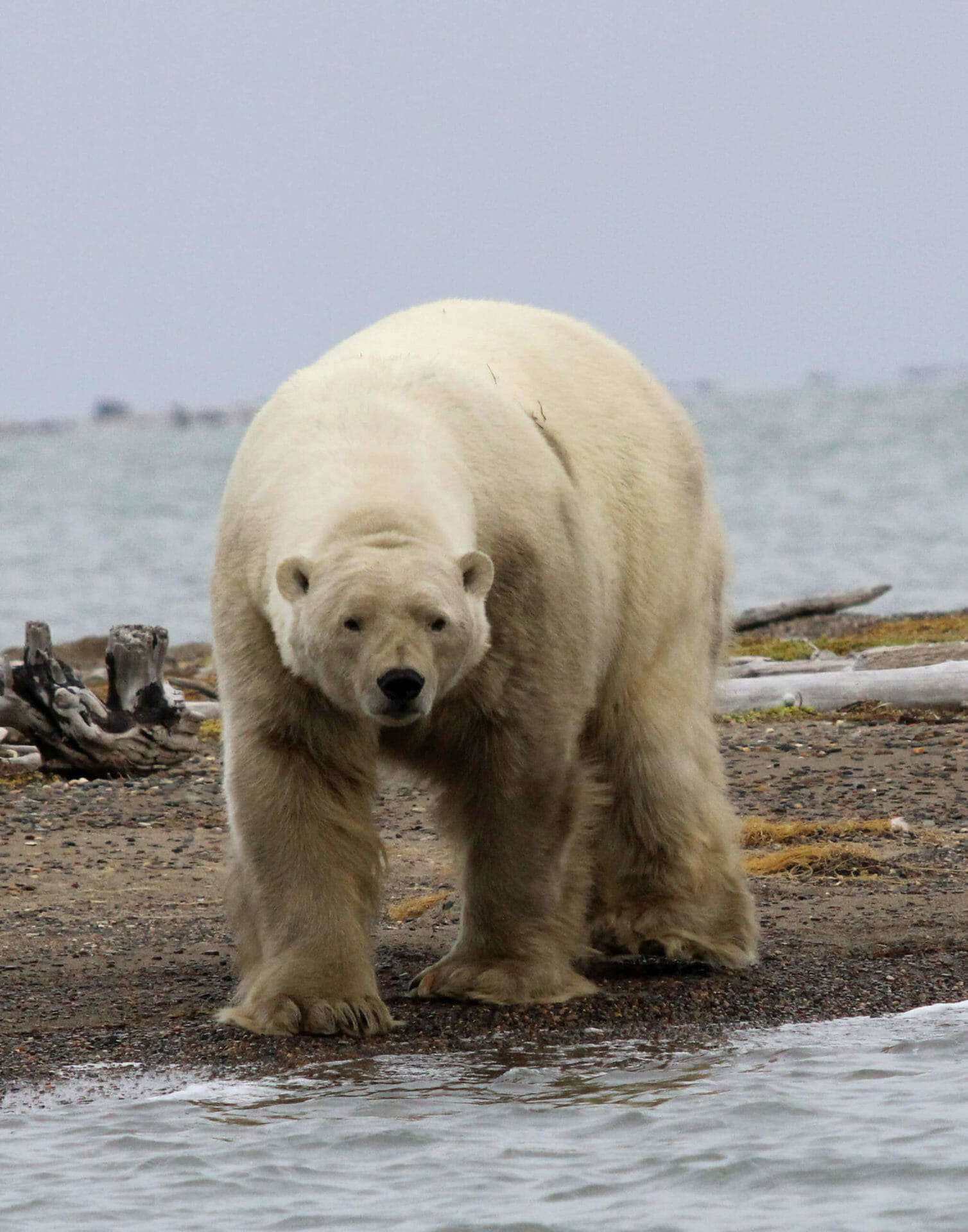
Polar Bears on Barter Island Dave Shaw photo

Polar Bears on Barter Island

were up in AK playing with fire I’m not — instead I’m sitting behind a desk thinking about polar bears. I’m not just thinking about the last two Septembers when I joined fellow guide Dave Shaw watching the bears around Barter Island, but I’m also thinking about how their future is being decided right now by scientists and policy wonks in Washington DC. One of the great things about working for Arctic Wild is the conservation ethic that the company has, all of the guides are encouraged to learn about and talk about the threats posed to these special places we visit and we are encouraged to advocate for their protection. This is where you all come in. Right now the Department of the Interior is taking comment on a proposal to designate critical habitat for polar bears across the arctic – from the eastern edge of the Arctic Refuge all the way to Pt. Barrow. The Department of Interior needs to hear from you.

A little background: The polar bear depends on the frozen Arctic ocean to travel and hunt. Over the past

Polar Bear in the Beaufort Sea Critical Habitat Area

Polar Bear in the Beaufort Sea Critical Habitat Area

few decades amount of ice that covers the ocean has diminished by almost half. Scientists have said that by the middle of this century the Arctic might be ice free in summer – this would be devastating to polar bears. In 2005 conservation groups petitioned the Bush Administration to protect the bears by listing them under the Endangered Species Act. Not surprisingly the Bush Administration declined to do so. This prompted two lawsuits before, in May 2008, the bear was finally listed as threatened under the Endangered Species Act. In 2009, thanks to a huge outpouring of public comments the U.S. Fish and Wildlife Service proposed the protection for more than 128 million acres of the species’ habitat: the largest critical habitat proposal in Endangered Species Act history.

To make sure that the USFWS follows through on their proposed critical habitat they need to hear from people across the country that care about the future of these bears. Please take a minute to click over to the Sierra Club Take Action page and send in a comment

If you have any questions or want to know of other ways you can help protect America’s arctic please drop me an email dan.ritzman –at-sierraclub.org

Alaska Winter Fun

By: Co-owner and Guide Bill Mohrwinkel

I get asked frequently on our trips “ what do you do in the winter”? Yes, It’s cold and dark, we are losing about 5 minutes off each day until December 21st. Aside from the usual winter activities such as skiing, ice skating, snowshoeing, and curling, the long dark days make us a little……wacky.

Lighting trapped methane on a pond in Alaska

Lighting trapped methane on a pond in Alaska

So last night Carrie, Halley Erickson and I decided to go down to the pond near our house, drill holes in the ice, releasing the trapped methane bubbles, and light the gas as it escapes up the hole. You get flames from a couple inches to a couple feet, depending on the size of the trapped methane bubble.  Ok, so it does involve a little adult beverage, It helps to calm your nerves when you light a big one that sounds like a jet engine. I know, sounds crazy. Anything to help with these long dark days, like sitting in front of my light box as I write this. But I really don’t think I could live anywhere else.

If you want to experience what it’s like in the winter in the Arctic, join us in April for our Brooks Range Winter Wildlife trip. There’s much more daylight, so I promise we won’t be as weird!

Methane in arctic lakes is a lots of fun (a real gas). It is also the topic of research at UAF.  Here is a link and an except from a recent article about methane in arctic lakes:

“Lakes really flared up on this icy permafrost landscape, emitting huge amounts of methane,” she said.

As the permafrost around and under the lakes thaws, the organic material in it–dead plants and animals–can enter the lake bottom and become food for the bacteria that produce methane.

“All that carbon that had been locked up in the ground for thousands of years is converted to potent greenhouse gases:………….

Bears in the Utukok Uplands

By Arctic Wild guide, Ron Yarnell

It was one of those typical days on our June 2009 Utukok Basecamp trip. Sun was up. (Of course it never

Bears near the Utukok

Bears near the Utukok

really sets here in June, 175 miles north of the Arctic Circle).  After a leisurely breakfast we ferried folks across the river in one of the canoes we had assembled for the river trip that was to follow the base camp. We had already taken several hikes on our side of the river and decided that today we would climb the ridge across the river to see what we could see on that side of the valley.

After successfully getting everyone across, we climbed the tundra-covered ridge. Wildflowers were

everywhere. A few caribou were still passing through the country on their way to meet up with the cows and calves that were, by now, farther to the east in the Kokolik River drainage.

From the crest of the ridge we could look up-valley to Driftwood Creek, a major tributary

Archemides Ridge in the Utukok Uplands

Archemides Ridge in the Utukok Uplands

of the Utukok headwaters. Beyond the foreground hills rose the snow-covered peaks along the Arctic Divide that separate the north-flowing drainages from the west flowing Noatak River.

Peaks in this part of the Brooks Range aren’t as dramatic as in the Arctic National Wildlife Refuge or the Central Brooks Range. This is a land of expansive landscapes with long-distant views. You can see for a hundred miles. It is also remote. It took us nearly three hours to fly here from Coldfoot, in the Central Brooks Range, itself an hour’s flight north of Fairbanks.

And the walking….. Its incredible. For such rolling country it is surprisingly dry. (Where are the tussocks)? I assume it has something to do with these long linear ridges, which go on forever. The one we were on this morning goes for over 30 miles, all the way to the Kokolik River.

“What’s that across the side valley? That splotch of brown on the green tundra, near those bushes.” Sitting down on the ground and using my knees as a platform to hold my binoculars, I was able to confirm that we had something animate in those bushes. Sure enough it occasionally moved. Walking on up the ridge for a better view we confirmed that it was a grizzly bear. Then it morphed into two grizzlies…..then three and eventually four. Now this was unusual.

We had already seen a few grizzlies in the vicinity, most moving east, where the caribou were going, following the same ridges we were. Did they have caribou calves on their minds?

But four grizzlies all together. It wasn’t the berry season. Was it a sow with three cubs? (Very unusual this high in the arctic). One did appear to be a bit larger. And they were all piled on top of each other. In fact that is what made it so difficult to determine the final number. It was one big mass of brown fur, from which a head or two would occasionally materialize.

This puzzle required a better viewpoint. Slowly, and crouching, the six of us moved to a location several hundred yards from our grizzlies. Then after watching them for 5 or 10 more minutes we moved to a better location, about a hundred yards closer, where we could be more concealed. Unfortunately in the process one of the cubs spotted our movements. It was incredible. A hundred yards is a good distance for a bear to see. Especially considering the fact that we were crawling on our hands and knees, at a very slow pace. This one cub got up and ran up onto the tundra above the others. It wanted to leave, but wouldn’t leave “Mom”.

Of course this alerted the other three. They looked in our direction. Everyone froze. Mom went back to playing with one of the siblings. She didn’t see us and wasn’t the least bit nervous.

For the next several hours we watched these four bears playing on the snow field. The one nervous cub never did get over it. Numerous times he tried to convince “Mom” to leave, but she would have nothing to do with it. Once in a while one of the others would look our way, but by this time we were well concealed below the tundra, with only our heads visible. They played and played. Sometimes “Mom” would disappear down to the creek, and we would all get nervous, because she was out of our sight and might come up on the tundra, on our side of the creek, 50-75 yards away, a distance I was uncomfortable with.

These three cubs must have been three-year-olds, as they were practically the size of their mother. (Here in the arctic, grizzlies keep their young three or even sometime four years). It is hard to believe “Mom” could do this, raise three cubs this far north. But there she was constantly playing with  the one cub. They all seemed healthy, and certainly had the energy to play endlessly. At one point they found the perfect slide, where they could slide down the snowbank and off the cliff into the creek.

Finally we decided we needed to have lunch (it must have been four in the afternoon by now), so we slowly backed up the ridge, leaving the bears to play on the snow field. It had been a good day. We had experienced one of those rare moments in arctic wildlife encounters that will be burned into our minds for the rest of our lives. This land needs to be protected for future generations of grizzly cubs and caribou calves. Hopefully, 100 years from now, other groups like ours, will still be able to sit on the tundra and watch a family of grizzlies playing on a snow field.

Caribou Movement in Alaska’s Arctic

Caribou in the Arctic Refuge

Caribou in the Arctic Refuge

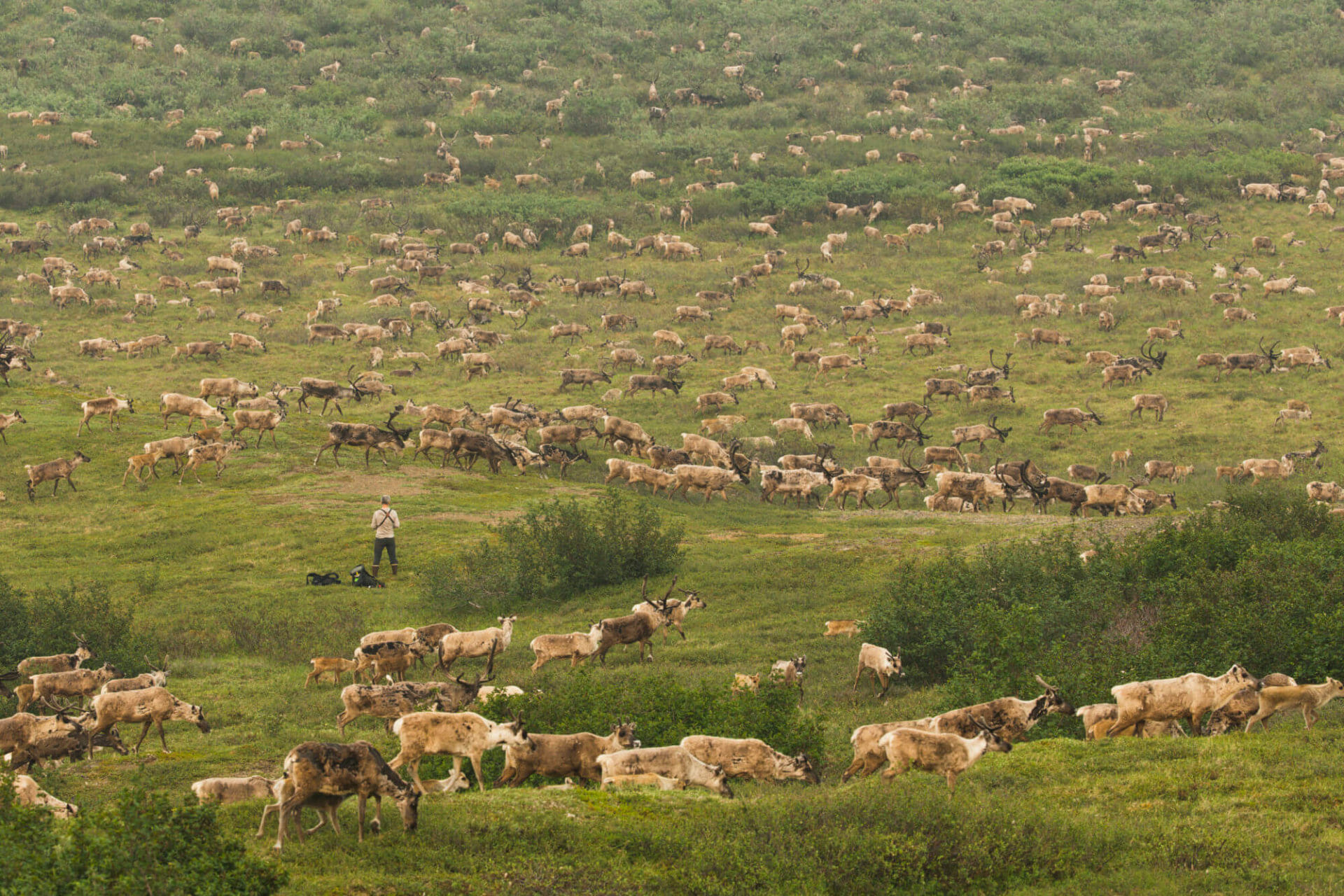
Predicting caribou movements is like trying to track a ghost. Caribou migration patterns are affected by innumerable factors including distribution of quality forage, snow depth, insect abundance and hatch timing, wind direction and calf production. We love seeing the big herds streaming across the tundra and our job of planning trips to coincide with caribou movements just got a little easier. CARMA (Circum Arctic Rangifer Monitoring and Assesment Network) has produced animations of caribou movements around the arctic. By compiling satellite data from several years they have plotted the locations of adult female caribou as they move across their range. The resulting movie shows the tremendous sweeps of country they cover moving from wintering grounds south of the mountains to upland calving grounds and the frantic search for bug relief in July. Check out all of the animations here or download the Alaska movie here.

Caribou on the Kokolik River

The Kokolik River is a wonderful canoe trip for so many reasons. The river is clear and swift, Alaska Cariboumaking for fun but easy paddling. The scenery is spectacular and varied as the river cuts through rocky ridges and emerges into broad basins only to reenter the canyons a few miles later. Bird watching is a true joy. In addition to species common to Alaska’s arctic like Lapland longspurs, short-eared owls, and rock ptarmagin we see Asian migrants like blue-throats, wagtails, and bristle-thighed curlews. We see scores of raptors nesting on the river’s cliffs and bluffs including white gyrfalcons, peregrines, and rough-legged hawks. Muskox are common, as are bears, marmots, and foxes. Swans and geese are plentiful and the hiking is superb. But the real jaw dropper on the past two canoe trips I have guided down the Kokolik has been our encounters with the Western Arctic herd of caribou. Recent estimates place the population at around 300,000 animals, so we have only seen but a fraction of the herd, but on one trip so many animals swam the river it became white with shed hair. I would guess we saw 60,000 animals in a 24 hour period! In 2008 we also got to see both wolves and bears chasing and eating caribou. It is thrilling to see such an abundance of wildlife. Here is a little video clip I took in June 2008. The footage isn’t great but it does convey the mass of animals we saw at lunch one day.

Arctic Wild Guide Publishes Wildlife Book

WILD MOMENTS: Adventures with Animals of the North

Edited by Arctic Wild guide, Michael Engelhard is now available.

Wild Moments: Adventures with Animals of the North

Last August, on a nine-day backpacking trip I guided for Arctic Wild, we had a wolf walk right into our camp at Alapah Creek. My clients—a couple from Switzerland—were awed by the fact that you could just sit still and let a top predator come to you . . .

Aside from silence, solitude, open space, and the transcendent light, what keeps drawing many of us to high latitudes is the promise of a full deck of charismatic wildlife. Where else can you watch an entire hillside come to life as caribou follow their ancient call? Where else can you float serenely by grizzlies grazing on shore? Where else do distant boulders turn into musk oxen upon closer inspection?

After one such encounter, I got to thinking: what incredible stories of encounters with northern wildlife are out there, waiting to be told? I set out to find some of the best, and the result is Wild Moments: Encounters with Animals of the North, published last spring by the University of Alaska Press.

Below is an excerpt from the book’s introduction, describing the event that triggered the idea for the book. I hope it will revive treasured memories, help you through the cold, dark season, and whet your appetite for next summer.

* * * *

A few years ago I was guiding a backpacking trip in Alaska’s Brooks Range, an Arctic extension of the continent’s spine. One scene from that trek burned itself into my memory; unrivaled by other backcountry episodes, it keeps quickening like an ember when it is stirred. In less time than it takes to lace up my hiking boots, notions of invulnerability had turned to ashes. I was not, after all, exempt from Nature’s accounting.
During a layover in upper Joe Creek we struck out to bag one of the unnamed peaks that crowd the valley, or rather, to succumb to the view from the top, of range upon range marching toward the horizon. While we were crunching through gravel past hedgerows of willow, I chatted with the group strung out in the wash. Near a brace of limestone bluffs, belligerent coughing interrupted our footsteps and conversation. Bull caribou, I thought, as I scanned the slopes for movement.
For days we had tracked caribou along the ruts they braid into marshland, over passes, down broken defiles, fording streams fat with boulders, waist-deep in snowmelt or up to our kneecaps in mop-headed tundra, trying to get within optimal camera range, which meant close enough to hear the herd’s voice—its grunts, groans, and snorts a parody of arthritic men—or, closer still, what sounded like knuckle cracking: the tendons in feet that plied aufeis and scree and post-holed the boggy pits between tussocks with the efficiency of pistons. In the migration’s wake we had stalked wildness. Next thing we knew, it came barreling down at us from a ridge—huffing, jaws snapping, ears flattened.
“Cub and two sows,” I called out to my clients. My mind somersaulted, scrambling language. A female grizzly, a blond bulge of muscle and fur, rippled downhill with twin teddy bears in tow.
Following my lead, the group scuttled up the embankment, determined not to panic or turn their backs to the bear. We then stood and faced carnivorous disenchantment. As I fumbled with the pepper spray’s safety, I understood hermit crabs caught outside of their shells. Every fiber in my body itched to run, or at least to curl into fetal position before impact.
The sow reached the creek bed sixty feet from us.
To everybody’s surprise, a lingering trace of our scent stalled her like an electric fence. In one fluid motion she pivoted, reprimanded one of the fuzz balls at her heels with a plate-size paw, and blustered up the wash, her cubs trailing as if attached by rubber bands.
Dumbfounded, we tried to coax our heart rates back to normal. The tundra was awash with adrenaline, abuzz with color and detail. The air seemed sweeter, the sun warmer. We flopped down and decompressed, our voices overlapping in disbelief.
Any attempt to fit the scuffle into a quotidian frame of reference failed. We had teetered at the brink. We had passed through moments in which nerves and ligaments could have snapped, trajectories could have changed.
After fifteen minutes—long enough for the sow to traverse several ridges and valleys if she chose to—we continued our hike. Each rock-bear on the hillside appeared ready to trundle. Around the next bend I promptly spotted her again. She was contouring a slope high above. But no, that one looked different. Its legs were the color of freshly cut peat, darker than the body; its size and shoulder hump declared it a male. The boar paid us no attention. He ambled through talus to a razorback ridge, where debris from the mountain swallowed him.
Craving a plot for apparent randomness, we replayed both sightings in search of clues.
Most likely, the sow had first scrapped with the boar. (Male grizzlies kill offspring by rivals to better the chances of their own genes.) She must have been riled up already when she heard us in the wash. Poor-sighted like all bears, she then rushed at the new trespassers to protect her cubs.
As soon as she realized her mistake she bolted in terror, as most grizzlies will upon getting a whiff of people.
By fitting the pieces together, we made sense of the experience. We would revisit it for years to come—embellished, refined, acted out, or on paper—whenever bear behavior cropped up as a topic. In the retelling we construed meaning, and the emphasis slowly shifted from personal, localized lore to link with larger mythologies.

* * * *

For more wild moments and information about the book, you can go to:
http://www.uaf.edu/uapress/wild_moments.html