Kaktovik Whales

A VERY SPECIAL DAY IN KAKTOVIK by Moe Witschard


This past September, after guiding my final Arctic Wild trip of the season, I found myself at the Okpilak/

Maktak in Katovik

Bowhead Maktak

Hulahula Delta with two friends, getting picked up from an 11 day personal trip.  We were met by our Inupiat friend Eddie, who gave us a ride in his motorboat back to his home village, Kaktovik, on Barter Island, from where we planned to fly back home the following day. As we paddled up to his boat, Eddie greeted us and excitedly told us “ I think you guys are gonna see a whale. It sounds like they got one today ! “.


The fall arctic air was cold on our faces as we motored past Bear Island, which was littered with polar bears, probably fifteen. As we pulled onto the beach in Kaktovik and got out of Eddie’s boat, we learned that it was true. A local Inupiat captain had taken a 42 foot Bowhead Whale a few hours before, and was towing it to the village.


The Inupiat have always been whalers and the people of Kaktovik are allowed to take three Bowhead Whales each Kids Celebrate the Traditionwhaling season, which runs from mid August to mid September, roughly. This was the third and final whale of the season. The tail of this whale was hooked up to a front loader and the carcass dragged up onto the beach. The entire village was out to meet the whale in celebration. Everyone was there. As tradition has it,  the first step is for the children of the village to take turns proudly standing on top of the whale. Following this exciting time when many, many smiles were shared and pictures were taken, the work began. After rinsing the whale, men from the village, led by the family of the captain who took the whale, get busy butchering. We watched for about 5 hours and the men were about half way done when we decided to head to bed as we were hoping to not to meet any of the polar bears that wander the village freely after dark.


The feast went well into the evening. Chunks of the deep maroon colored meat were boiled and served up with a Cleaning the Whalelarge selection of condiments: salt, pepper, A1 steak sauce, bread and butter pickles, jalapeños, and much more. The meat was complemented by Unalit the outer two inches of the skin and blubber of the animal, which is sliced thin, boiled, and served.  I never thought I’d eat whale, but it was truly delicious !….not unlike a fine cut of elk. People wonder it it’s fishy: not true. In the days that followed, the whale was distributed to members of the village, with the captain’s family keeping some of the finer cuts.


I never thought I’d have an experience like that in the arctic. It’s all about the timing. Now I understand how activities like the regulated Bowhead whale hunt keeps a village like Kaktovik vibrant and proud.

Alaska Wilderness Cooking

Cooking in the Backcountry- Bill Mohrwinkel

Camping Food

Nutritous Camping Food

Arctic Wild leads trips across Alaska and in all sorts of weather. But one thing all our trips have in common (other than great guides) is quality, nutritious food. Whether backpacking, rafting, or canoeing, you typically burn many more calories than in your normal day-to-day life. Food is fuel and if you like what you are eating out there, you’ll be happy and healthier. Delicious and well balanced meals add pleasure to each day and contribute to the health and safety of each of our trips. We hope the following information will be helpful in planning your own trip into the Alaska wilds.

Items to consider when coming up with your menu:

• Group size: How many mouths to feed?

• Mode of Travel: Are you backpacking- carrying everything on your back or rafting- floating it on water?

• Duration of trip: Plan an extra food if you are relying on a plane to pick you up or in a situation where you could get weathered-in.

• Exertion level: You will burn more calories backpacking than rafting.

• Climate/Altitude: You will burn more calories if it’s cold. When you’re at altitude, you will lose your appetite; bring food that is especially tasty.


alaska cooking

The backcountry chef at work

• Appetites: A 17-year-old male eats a lot more than a 50-year-old woman.

• Food Preferences/ Allergies: Make sure you pack food that everyone likes and ask about food allergies.

• Nutritional Balance: Very important. I am not a big fan of going out with all freeze-dried food. It lacks adequate nutrients, tastes bad and it’s expensive. More about this below.

• Expense: You can find really good inexpensive food at your local grocery store. Most larger ones have excellent bulk food sections.

• Quantity: Here are some basic guidelines to work with:

Pounds/ Day/ Person:

  • 1.5-1.75 (2500-3000 calories) – summer backpacking
  • 2-2.5 (3500-4000 calories) Sea kayaking/ rafting
  • 2.5 (4500-5000 calories) Mountaineering/ winter camping

Nutritional Balance is very important. You should have a good balance of Protein, Carbs and Fats. Think of eating like building a fire: Carbs are your kindling and protein and fats are your logs.

Some Food Ideas:

Breakfast:

  • camping food

    Arctic Wild food storage room.

    Pancakes

  • Hot Cereal
  • Breakfast Burritos
  • Granola
  • Bagels/quick breads
  • Breakfast meats

Lunch:

  • Crackers
  • Bagels
  • Cheese
  • Trail Mix
  • Hot Lunch (instant soups, noodles-bring a thermos)
  • Dried Fruit
  • “ Energy” Bars (Cliff, Tiger, etc. There are thousands to choose from!)
  • Chocolate!
  • Jerky/meats

Dinner:

  • Pasta
  • Beans (dried)
  • Rice (not instant)
  • Lentils
  • Couscous
  • Soups
  • Meat/fish/ meat substitute/tofu

Extras:

Dried or fresh Veggies

  • Garlic
  • Onion
  • Cabbage
  • Carrots

Hot Drinks:

  • Coffee (real or Starbucks makes good instant)
  • Hot Cocoa

    Happy Camper

    Eating well on a river trip

  • Hot cider
  • Tang (great hot)
  • Tea
  • Powdered Milk and Honey

Spice Kit (aka food repair kit):

  • Oil
  • Soy Sauce
  • Hot Sauce
  • Salt and pepper
  • Garlic
  • Chili Powder
  • Curry
  • Cinnamon

Books:

NOLS Cookbook

Hungry Hiker Cookbook

I hope this helps you when planning food for your next outdoor adventure.

Coming soon: some of our favorite recipes and cooking tips!


Arctic Wild Tours the West Coast in February.

Unexplored AlaskaI will be giving a series of slideshows in both California and Washington during the second half of February 2012. I plan on featuring an exploratory trip in the headwaters of the Colville River from 2010. In telling the story of that great trip, I’ll cover natural history of the area, conservation, and also talk about some of the other trips that we offer. I’ll post my schedule for the tour once it is finalized, but I still have time and energy to give presentations to groups large or small. If you know of a hiking or paddling club, conservation organization, or even a group of friends who would be interested in learning about Alaska wilderness travel. Please contact me and we will arrange a slideshow for your group.

See you in February.- Michael

Iditarod Tour

Our friend and guide Laurent Dick will be leading a trip to Nome this spring. There are just a couple spots left, so contact him soon if you want to be part of the action. Laurent is a wealth of knowledge and Nome is a beautiful place.

2012 Iditarod Finish & Northern Lights Tour Package


Best of 2011

Happy New Year.

Our best photos of 2011 can be seen in a short slideshow below. We had a wonderful year exploring Alaska’s great wilderness and are looking forward to another summer of adventure. Contact us to start planning your trip in 2012.

If you would like a DVD of the slideshow, let me know and I’ll send you one.

Hank the dog- January, 2003- December 25, 2011

For the past 9 years I have had the good fortune to have a wonderful dog with me on many adventures. Hank died on Christmas Day, and though I’ve never seen an obituary for a dog, He deserves one.

Hank in the Brooks Range

We got Hank as a puppy, from the shelter in Fairbanks and within a couple of weeks he was on his first winter camping trip to the remote Hootlanana Hot Springs north of Fairbanks. His career as an adventuring dog was off to a good start. During his first summer we got to backpack in the Philip Smith Mountains and then raft the Canning River to the Arctic Ocean. From there it was off to Barter Island where he emptied a can of pepper-spray into a hotel carpet; a story which eventually made it into the New York Times. Since then, he has traveled widely in Alaska mostly on personal trips but also on the occasional guided trip, becoming so comfortable with small planes that we would just load-up and wait for the ride to begin. When not roaming the Brooks Range (usually in heel) he has been my constant companion on countless more mundane adventures. Though bred to be a herding dog, he found his true calling as a greeter, wagging his whole body and talking up a storm to anyone arriving at our home or the Arctic Wild warehouse. In addition to brightening our days he also thwarted a moose who was determined to stomp me, alerted us to bears approaching camp, bravely chased an entire pack of wolves from our camp and dutifully watched over our young boys even when they mauled him. I could write about Hank for hours, but suffice it to say that we couldn’t ask for a better dog. We will miss him for many, many years.


Aleutian Hot Spring Adventure

In July 2011, a fun-loving group of friends hired Arctic Wild to guide them on a wild and far-flung adventure in the eastern Aleutians. We spent a week camping on a remote beach; from our base camp we explored the steep and lush mountains, walked the beaches, fished the creek and, of course, soaked in the hot springs. You can have your own Aleutian Hot Springs Adventure in July 2012.

Here is a video of the trip we took last summer.

Evening Light in Gates of the Arctic

One of the remarkable things about camping in the arctic is the long evening light with rich colors and long shadows. Where else can you watch the sunset for 3 hours, only to watch it begin rising again immediately?

Early August is a time between the explosion of spring flowers, and the yellows and reds of autumn. At this time of year, with a subtle color palette, the long evening light makes the the tundra shine.

Gates of the Arctic National ParkCameron Baird took this photo near the Continental Divide in Gates of the Arctic National Park.

Polar Bears in the Arctic National Wildlife Refuge

The fog hangs thick along the arctic coast. The flat light and the flatter landscape make it difficult to identify objects. You can find yourself wondering….Is that a giant driftwood stump a mile away or an eider duck at 200 yards? It is disconcerting when you can’t trust your eyes.

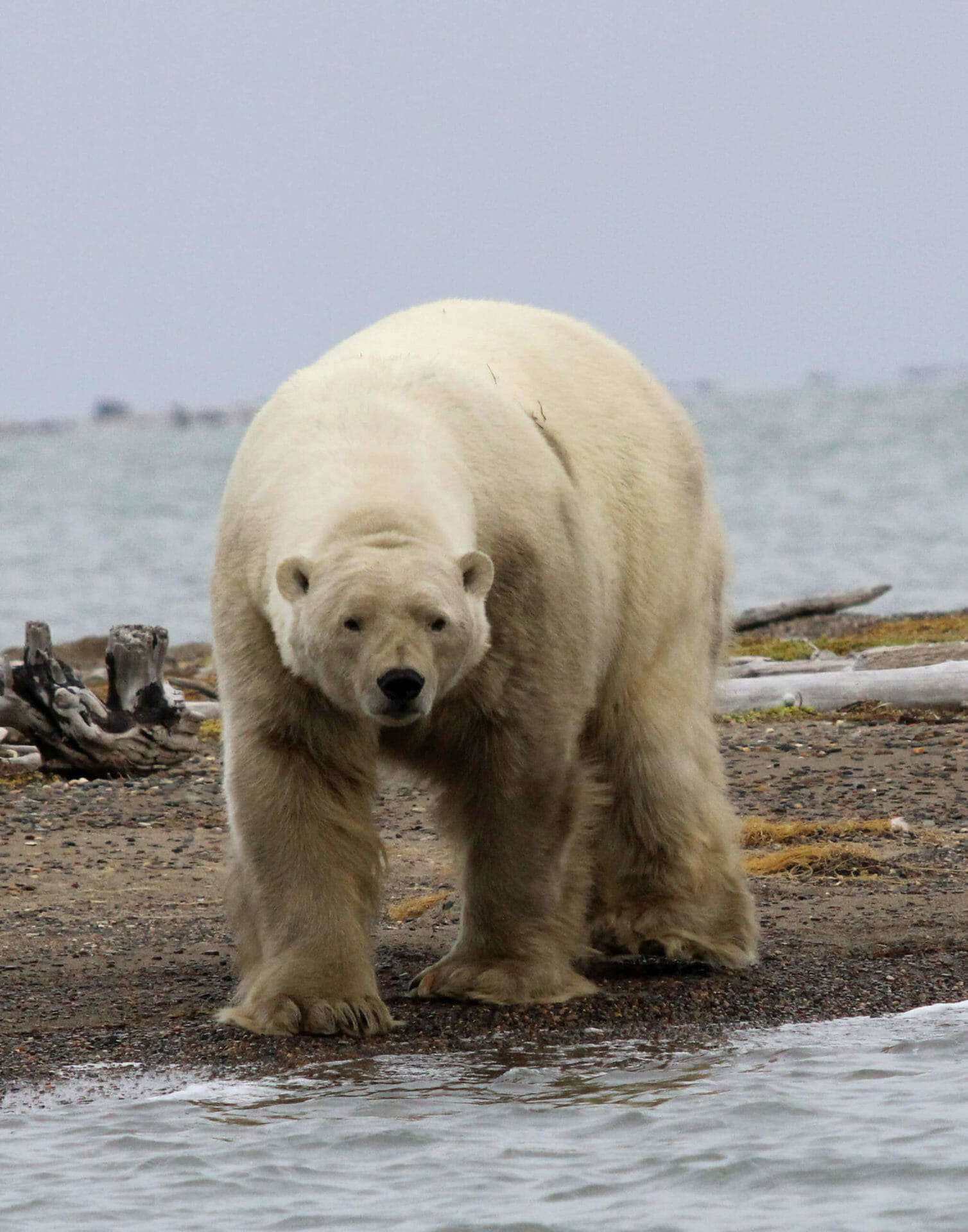
Whenever I find bear tracks on the arctic coast, I try to tell myself that they are from a Grizzly Bear. I’ve spent more time around them and they produce less anxiety. I know they are usually from Polar Bears but when I do get to see them, it is always a privilege.

Polar Bears in Alaska

Dan Ritzman took this photo near the village of Kaktovik in the Arctic National Wildlife Refuge.

Alaska Backpacking

This photo was taken by Cameron Baird up on Archimedes Ridge in the Western Brooks Range. The reason I like the picture, is that he took the very normal subject of his pack at rest and showed us the beauty in it. I’d have just sat there trying to remember what sort of snacks were in the top pocket. I love the way he captured to big-sky and sense of infinite space which characterizes that part of the Brooks Range.

Backpack- Cameron Baird